



864-527-6330

Call For Quicker Scheduling

Our Regional Divisions

Our Regional Divisions

Bowing Leaning Walls2026-04-07T12:26:19-04:00
bowing wall cracks USR

How We Fix The Problem

  • 1

    You Receive A Free Inspection

  • 2

    We Diagnose The Real Issue

  • 3

    We Install A Permanent Solution

How We Fix The Problem

  • 1

    You Receive A Free Inspection

  • 2

    We Diagnose The Real Issue

  • 3

    We Install A Permanent Solution

Bowing & Leaning Basement Wall Repair

A basement wall that is bowing inward or leaning isn’t cosmetic, it’s a wall failing under lateral soil pressure. The sooner it’s addressed, the more repair options you typically have.

Upstate Structural Repair inspects and repairs bowing/leaning basement walls across Upstate South Carolina and Western North Carolina.

bowing wall cracks USR

Warning signs of a bowing or leaning wall

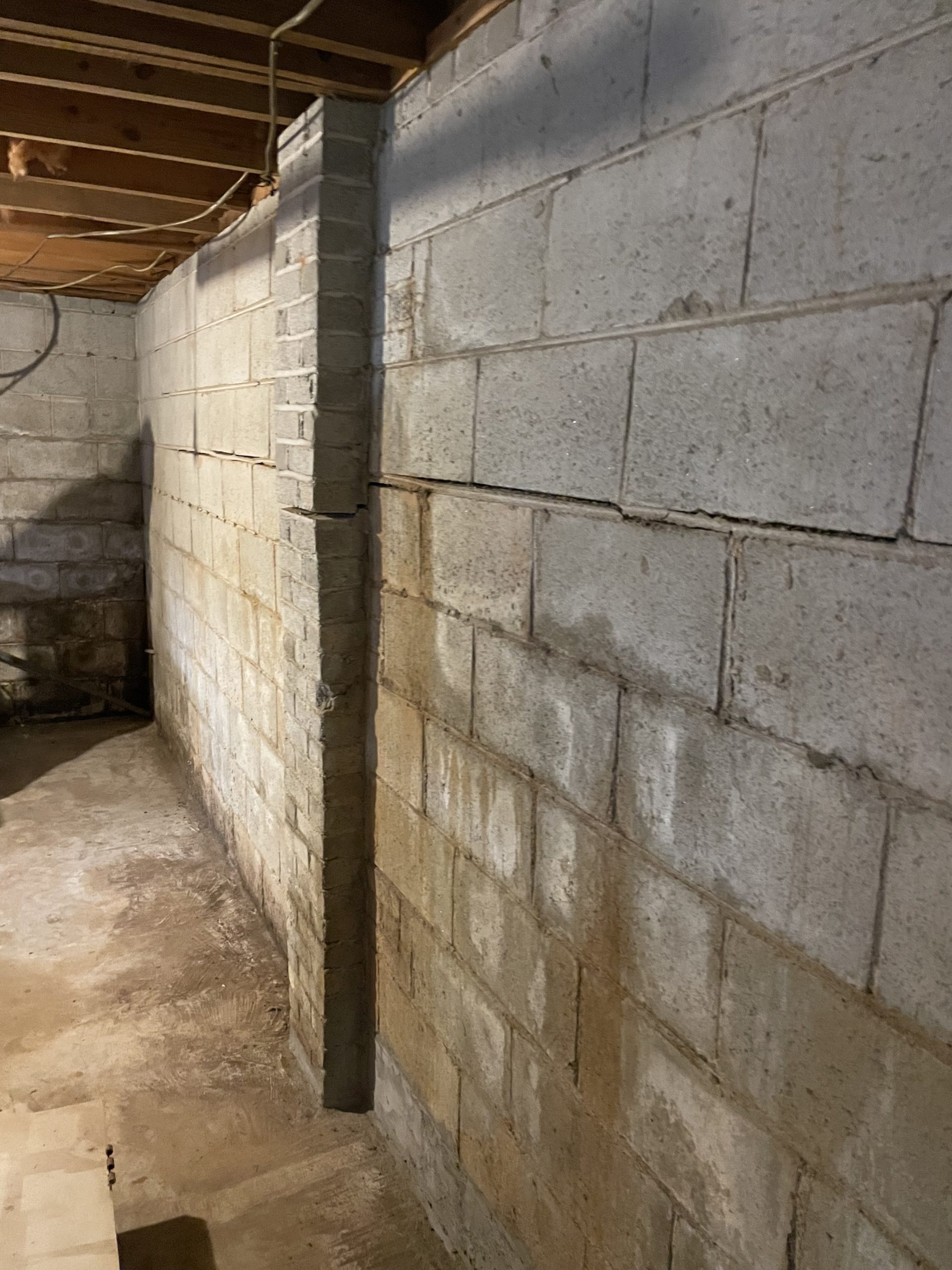
Horizontal cracking (common with bowing)

A horizontal crack, especially in the middle or lower portion of the wall, often indicates the wall is bending under pressure and has reached its capacity at that point.

Leaning without cracking (still serious)

Sometimes the wall tilts inward at the top without a clear crack pattern across the wall face. This often relates to failure at the connection point to the structure above, and the wall becomes out of plumb as a unit.

Bottom line: the key measurement is how far the wall has moved from its original position.

get a free quote

Why basement walls bow or lean

Basement walls resist soil pressure pushing from the outside. That pressure increases when:

  • Soil is saturated with water
  • Drainage or erosion changes soil conditions over time
  • Added weight sits near the foundation (driveway/patio/landscaping)
  • Freeze–thaw cycles repeatedly stress the wall (not common in the Carolinas)

The most important factor in choosing the right repair is how far the wall has moved inward (inward deflection).

Bowing/leaning wall repair options (and when they fit)
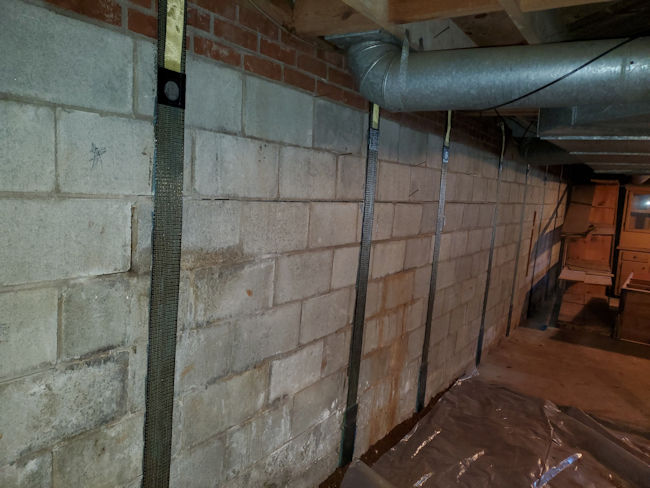
Carbon Fiber Straps

A minimally invasive stabilization method for walls that qualify. Typically appropriate when inward movement is under ~2 inches and the wall surface is sound enough to bond to.

What it does: Stabilizes the wall and helps prevent further movement

What it does not do: Does not push the wall back to plumb; it holds the wall where it is

Best for: Early-stage bowing, limited deflection, clean/sound wall surface

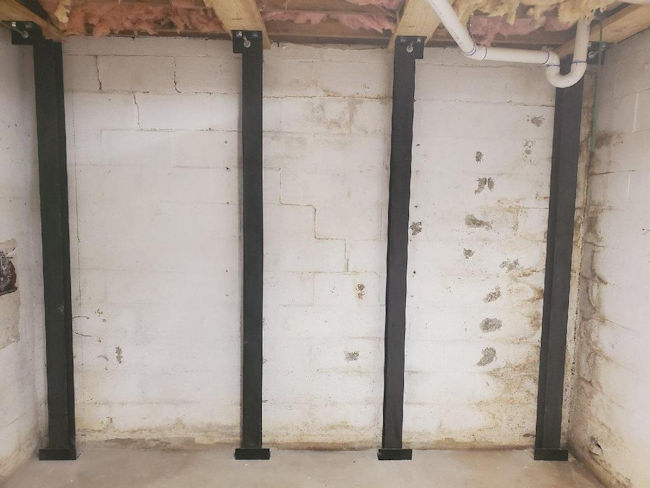
Steel Beams

A minimally invasive stabilization, but visually intrusive method for walls that qualify. Typically appropriate when inward movement is under ~2 inches.

What it does: Stabilizes the wall and helps prevent further movement, and provides some pressure against the wall

What it does not do: Will not restore the wall all the way back, can provide some correction

Best for: Early-stage bowing, limited deflection, where appearance is not as important and wall surface requires too much preparation for carbon fiber

Steel Wall Anchors (Wall Plate Anchors)

A rod-and-plate system that transfers load from the wall into the soil away from the foundation. Anchors can be tightened over time to gradually improve alignment.

What it does: Stabilizes immediately & offers the possibility of gradual correction over time with periodic tightening.

Best for: Moderate bowing, properties with enough yard clearance outside the wall (often ~10+ feet).

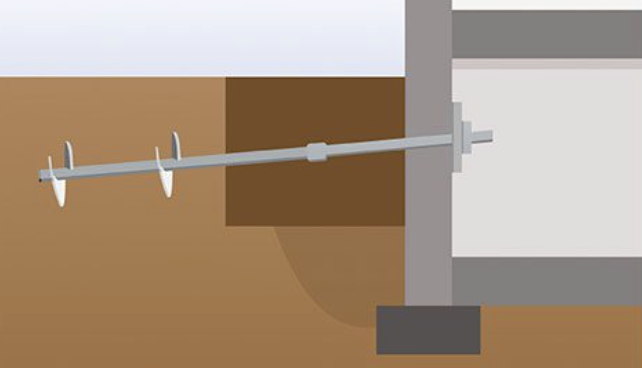
Helical Tiebacks

A heavy-duty anchoring system driven deeper into stable soil. Often used when movement is more severe, yard access is limited, or stronger anchoring is needed.

What it does: Stabilizes immediately & may provide some correction at installation depending on conditions.

Best for: More significant movement, limited exterior access, deeper anchoring needs.

Wall Reconstruction (rare, but sometimes required)

When displacement is severe or the wall material itself is too deteriorated to serve as a reliable substrate, reconstruction may be the best long-term option.

Best for: Severe displacement, multiple failure points, deteriorated materials, failed prior repairs.

How wall movement affects available options

As inward movement increases, options become more limited and more expensive. General guidelines:

  • Under ~2″ deflection: carbon fiber straps, wall anchors, helical tiebacks
  • ~2″–4″ deflection: wall anchors, helical tiebacks
  • Over ~4″ deflection: helical tiebacks, reconstruction
  • Leaning at the top: anchors/tiebacks depending on configuration
  • Deteriorated wall material: reconstruction

Do you need a structural engineer?

Often no for standard stabilization systems, but engineering may be required for permitting on some helical tieback installs or reconstruction depending on local rules. We’ll tell you during inspection if engineering is needed and can connect you with a trusted engineer if required.

Schedule a Bowing/Leaning Wall Inspection

If you’ve noticed a horizontal crack, bowing, or a wall that’s leaning inward, don’t wait for it to progress. An inspection confirms what’s happening and which repair method fits your wall.

Bowing, Leaning Basement Wall Repair FAQs

When is wall reconstruction needed?2026-04-06T09:48:18-04:00

When displacement is severe or the wall material is too deteriorated for stabilization systems.

When are helical tiebacks used?2026-04-06T09:47:13-04:00

For more significant movement, limited yard access, or when deeper anchoring is needed.

Do wall anchors fix the wall immediately?2026-04-06T09:46:31-04:00

They stabilize immediately; correction back toward plumb is typically gradual through periodic tightening.

Can carbon fiber straps straighten the wall?2026-04-06T09:45:47-04:00

No, carbon fiber straps stabilize and prevent further movement; they do not push the wall back.

What’s the best repair for a bowing wall?2026-04-06T09:45:06-04:00

It depends on inward movement, wall type, and exterior access. Carbon fiber fits early movement; anchors/tiebacks fit more movement.

How serious is a bowing basement wall?2026-04-06T09:44:29-04:00

Bowing indicates the wall is deflecting under soil pressure and typically worsens without stabilization.
Areas We Serve

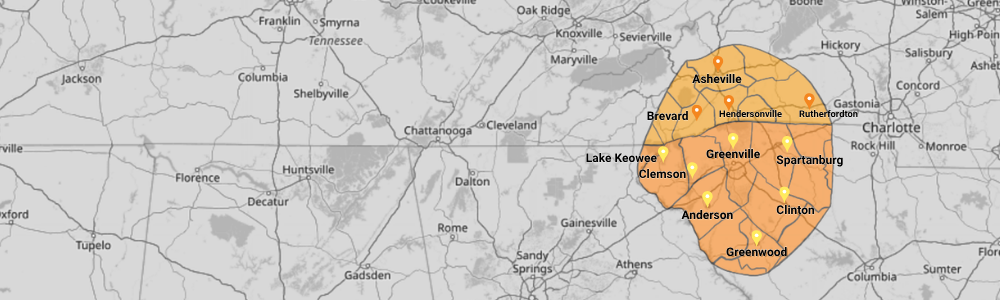
Our team provides foundation and structural repair services to a large area that covers part of Western North Carolina and Upstate South Carolina. The cities we service include, but are not limited to:

Greenville County — Greenville, Greer, Taylors, Travelers Rest, Mauldin, Simpsonville, Fountain Inn, Piedmont
Spartanburg County — Spartanburg, Boiling Springs, Duncan, Lyman, Inman
Anderson County — Anderson, Belton, Honea Path, Pendleton, Powdersville
Pickens County — Easley, Pickens, Liberty, Central, Clemson, Six Mile
Oconee County — Seneca, Walhalla, Westminster
Laurens County — Laurens, Clinton
Greenwood Area— Gaffney, Union, Greenwood, Cherokee

Buncombe County — Asheville, Arden, Fletcher, Candler, Black Mountain, Swannanoa, Weaverville
Henderson County — Hendersonville, Mills River, Flat Rock, Etowah
Transylvania County — Brevard, Pisgah Forest
Haywood County — Waynesville, Canton
Polk County — Tryon, Columbus, Saluda
Jackson/Macon (edge) — Sylva, Franklin

Areas We Serve

Our team provides foundation and structural repair services to a large area that covers part of Western North Carolina and Upstate South Carolina. The cities we service include, but are not limited to:

Greenville County — Greenville, Greer, Taylors, Travelers Rest, Mauldin, Simpsonville, Fountain Inn, Piedmont
Spartanburg County — Spartanburg, Boiling Springs, Duncan, Lyman, Inman
Anderson County — Anderson, Belton, Honea Path, Pendleton, Powdersville
Pickens County — Easley, Pickens, Liberty, Central, Clemson, Six Mile
Oconee County — Seneca, Walhalla, Westminster
Laurens County — Laurens, Clinton
Greenwood Area— Gaffney, Union, Greenwood, Cherokee

Buncombe County — Asheville, Arden, Fletcher, Candler, Black Mountain, Swannanoa, Weaverville
Henderson County — Hendersonville, Mills River, Flat Rock, Etowah
Transylvania County — Brevard, Pisgah Forest
Haywood County — Waynesville, Canton
Polk County — Tryon, Columbus, Saluda
Jackson/Macon (edge) — Sylva, Franklin

Go to Top