



864-527-6330

Call For Quicker Scheduling

Our Regional Divisions

Our Regional Divisions

Wall Anchors & Helical Tiebacks2026-04-07T01:22:39-04:00
foundation repair Dead Man Anchor System

How We Fix The Problem

  • 1

    You Receive A Free Inspection

  • 2

    We Diagnose The Real Issue

  • 3

    We Install A Permanent Solution

How We Fix The Problem

  • 1

    You Receive A Free Inspection

  • 2

    We Diagnose The Real Issue

  • 3

    We Install A Permanent Solution

Basement Wall Anchors & Helical Tiebacks

When a basement wall is bowing inward under soil pressure, repair options fall into two categories: systems that resist movement from the wall surface, and systems that engage the soil to counteract pressure at its source. Basement wall anchors and helical tiebacks are in that second category, and they’re often the right choice once a wall has moved beyond what carbon fiber can safely handle.

We install GripTite wall anchor and tieback systems, engineered hardware built specifically for residential foundation repair.

foundation repair Dead Man Anchor System

Signs you may need wall anchors or helical tiebacks:

  • Visible bowing that has progressed beyond early-stage movement
  • A horizontal crack across the wall (often middle/lower third)
  • Carbon fiber was ruled out due to degree of movement or poor substrate
  • Previous surface repairs failed or re-cracked
  • You want stabilization now with a path toward correction over time
get a free quote


Why Some Bowing Walls Need More Than Carbon Fiber
carbon fiber wall straps, basement wall repair

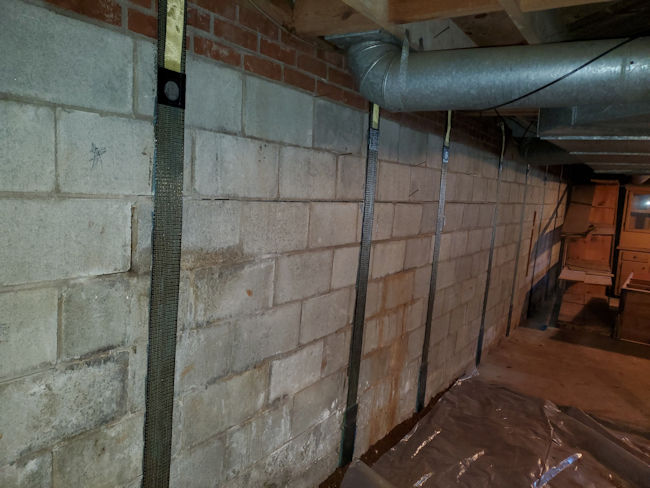
Carbon fiber straps are a strong solution for early-stage bowing (commonly under ~2″ deflection) when the wall surface is sound and the goal is stabilization before it worsens.

But carbon fiber has a ceiling. Once deflection increases, or the wall material is deteriorated to the point that a reliable bond can’t be established, you need a system that reaches beyond the wall and transfers load into stable soil.

That’s where wall anchors and helical tiebacks come in.


What Wall Anchors & Tiebacks Do
(The Real Goal)

Both systems:

  • Stabilize the wall by transferring lateral load away from the wall itself
  • Can help prevent further inward movement immediately upon installation
  • Are engineered solutions that typically require engineering, permit, and inspection

Important expectation: against a wall with full backfill (soil still loaded on the outside), the realistic immediate goal is stabilization. Any correction back toward plumb is typically gradual and not guaranteed.

Helical Tiebacks

A helical tieback also connects the wall to stable soil beyond the pressure zone, but instead of relying on a buried plate, it uses a helical shaft driven into the ground using a hydraulic motor.

How Helical Tiebacks Work:

  • A steel shaft with helical plates is installed through the wall at an angle
  • A hydraulic motor rotates the tieback into the soil until it reaches stable bearing
  • An interior plate is installed and the system is tensioned

What Helical Tiebacks Do Well:

  • Immediate, active stabilization
  • Reach deeper, more stable soil than conventional anchors
  • Work when yard clearance is limited or surface soil conditions are difficult
  • May provide some degree of correction at install (case-dependent)
  • Better suited for more significant deflection where anchors may be underpowered
foundation repair Dead Man Anchor System

Honest Limitations Of Helical Tiebacks:

  • More involved installation (hydraulic drive equipment)

  • Typically higher cost than conventional anchors
  • Engineering, permit, and inspection are standard
  • Like anchors, full immediate correction against full backfill should not be the expectation

Wall Anchors (Deadman Tiebacks)

A wall anchor system, often called a deadman anchor, connects the basement wall to an anchor plate installed in undisturbed yard soil beyond the pressure zone.

How Wall Anchors Work:

  • A steel rod is installed through the wall at set intervals
  • An interior wall plate bears against the wall face
  • An exterior anchor plate is installed in the yard soil
  • The rod is tensioned to stabilize the wall

What Wall Anchors Do Well:

  • Stabilize a bowing wall immediately
  • Allow gradual correction over time through periodic tightening
  • Work on both poured concrete and block walls
  • Avoid exterior excavation in many cases
foundation repair Dead Man Anchor System

Honest Limitations Of Wall Anchors:

  • Require yard space—typically ~10 ft of clearance to place anchor plates in undisturbed soil
  • Not a fit where utilities, hardscape, or structures exist in the anchor zone
  • Correction is gradual (months to years) and not guaranteed
  • Interior wall plates and rods are visible inside

When Remediation Isn’t Enough (Wall Replacement)

Anchors, tiebacks, and carbon fiber work with the existing wall. There are cases where the wall has moved or deteriorated too far for remediation to be reliable. If replacement is the honest answer, we will tell you.

Replacement may be indicated when:
  • displacement is too severe to safely stabilize in place
  • block/concrete has deteriorated significantly (spalling, failed mortar, widespread degradation)
  • prior remediation attempts failed and reliable anchoring points no longer exist
  • cracking patterns indicate systemic failure, not localized stress

Engineering, Permitting, and Inspection (Why It’s Required)

Both wall anchors and helical tiebacks are structural systems. A structural engineer typically:

  • designs layout and spacing
  • specifies system requirements
  • provides stamped drawings for permit
  • supports inspection documentation

This protects you long-term and matters during resale.

Benefits Homeowners Care most about

Bowing walls don’t stabilize on their own. The pressure that caused the movement is still there. The sooner it’s addressed, the more options you have.

What We Install

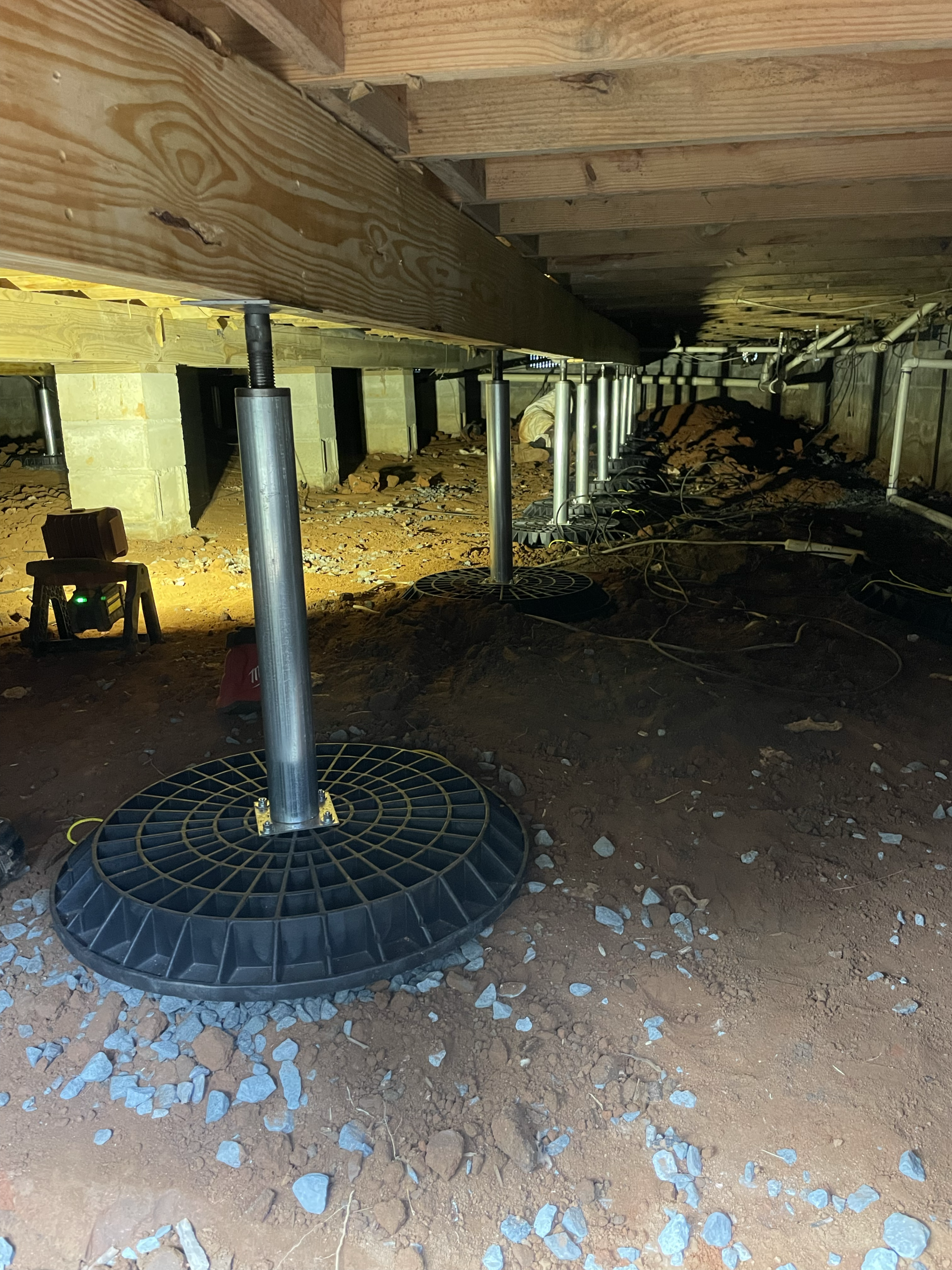
We use adjustable steel floor jacks/support posts rated for over 10,000 lbs, installed on a permanent composite footer base that sits on a gravel footing. This system is backed by an ICC rating, meaning it has been tested to meet load and building code requirements.

Wall Anchor & Helical Tieback Repair FAQs

Do I need permits and engineering?2026-04-07T01:20:32-04:00

Yes, anchors and tiebacks are structural repairs and typically require engineering, permit, and inspection.

Can either system push the wall back to normal immediately?2026-04-07T01:19:51-04:00

Stabilization is immediate. Correction is typically gradual and not guaranteed without excavation.

Are helical tiebacks better than wall anchors?2026-04-07T01:19:12-04:00

Not always. Tiebacks are better for limited access, deeper bearing needs, or more significant movement. Anchors are strong when yard access is available and gradual correction is desired.

How much yard space do wall anchors need?2026-04-07T01:18:32-04:00

Typically around 10 feet of clearance to place the anchor plate in undisturbed soil beyond the pressure zone.

Do wall anchors stop a wall from bowing further?2026-04-07T01:17:55-04:00

Yes. They stabilize immediately, then can be tightened over time for gradual correction.
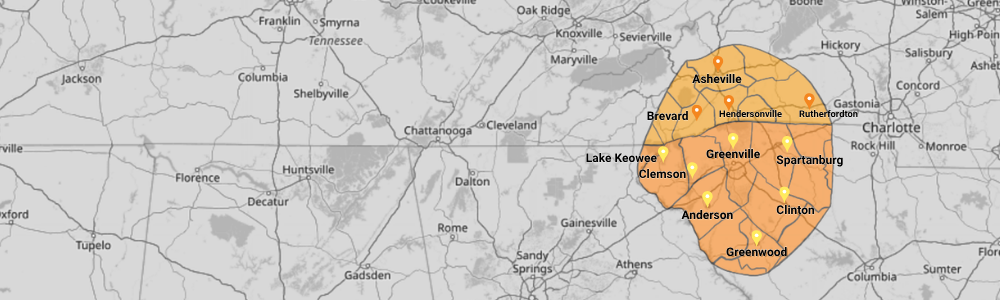
Areas We Serve

Our team provides foundation and structural repair services to a large area that covers part of Western North Carolina and Upstate South Carolina. The cities we service include, but are not limited to:

Greenville County — Greenville, Greer, Taylors, Travelers Rest, Mauldin, Simpsonville, Fountain Inn, Piedmont
Spartanburg County — Spartanburg, Boiling Springs, Duncan, Lyman, Inman
Anderson County — Anderson, Belton, Honea Path, Pendleton, Powdersville
Pickens County — Easley, Pickens, Liberty, Central, Clemson, Six Mile
Oconee County — Seneca, Walhalla, Westminster
Laurens County — Laurens, Clinton
Greenwood Area— Gaffney, Union, Greenwood, Cherokee

Buncombe County — Asheville, Arden, Fletcher, Candler, Black Mountain, Swannanoa, Weaverville
Henderson County — Hendersonville, Mills River, Flat Rock, Etowah
Transylvania County — Brevard, Pisgah Forest
Haywood County — Waynesville, Canton
Polk County — Tryon, Columbus, Saluda
Jackson/Macon (edge) — Sylva, Franklin

Areas We Serve

Our team provides foundation and structural repair services to a large area that covers part of Western North Carolina and Upstate South Carolina. The cities we service include, but are not limited to:

Greenville County — Greenville, Greer, Taylors, Travelers Rest, Mauldin, Simpsonville, Fountain Inn, Piedmont
Spartanburg County — Spartanburg, Boiling Springs, Duncan, Lyman, Inman
Anderson County — Anderson, Belton, Honea Path, Pendleton, Powdersville
Pickens County — Easley, Pickens, Liberty, Central, Clemson, Six Mile
Oconee County — Seneca, Walhalla, Westminster
Laurens County — Laurens, Clinton
Greenwood Area— Gaffney, Union, Greenwood, Cherokee

Buncombe County — Asheville, Arden, Fletcher, Candler, Black Mountain, Swannanoa, Weaverville
Henderson County — Hendersonville, Mills River, Flat Rock, Etowah
Transylvania County — Brevard, Pisgah Forest
Haywood County — Waynesville, Canton
Polk County — Tryon, Columbus, Saluda
Jackson/Macon (edge) — Sylva, Franklin

Go to Top