



Carbon Fiber Basement Wall Repair: Straps + Epoxy Crack Injection
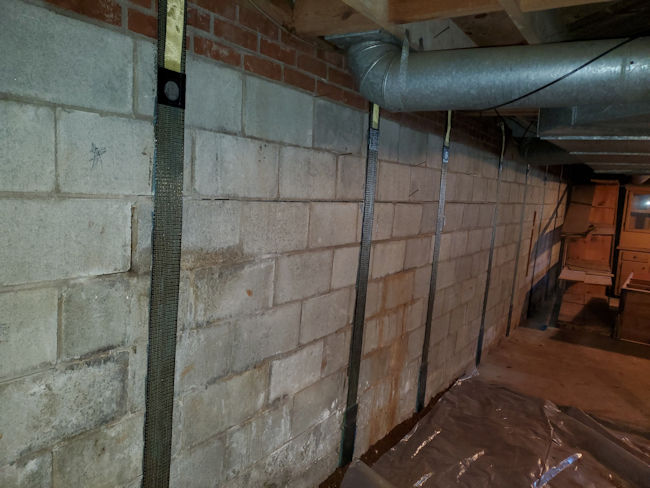
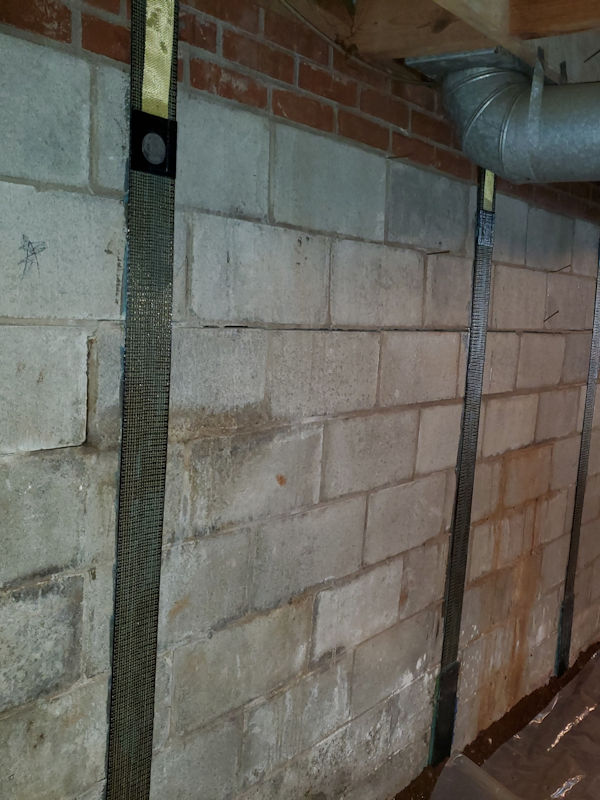
Carbon fiber and structural epoxy have changed what’s possible in basement wall repair. Together, they can restore, and in many cases exceed, the original strength of a cracked or damaged concrete wall without heavy steel, major reconstruction, or exterior excavation.
We use Structural Reinforcement Solutions (SRS) carbon fiber and epoxy products, American-made materials, with carbon fiber woven in North Carolina.
Signs carbon fiber may be the right solution
Why carbon fiber works on concrete walls
Concrete is strong in compression (being squeezed) but weak in tension (being pulled apart). Most basement wall cracks happen because tensile forces exceeded what the wall could resist. When that crack forms, the wall loses tensile strength at that location.
Carbon fiber is extremely strong in tension, and when it’s bonded with structural epoxy, it becomes tensile reinforcement the original concrete didn’t have. The epoxy bonds tightly to the concrete surface, and the carbon fiber carries tensile loads across the repaired area.
Two Applications: Crack Repair Vs Wall Reinforcement
get a free quote
Carbon Fiber Repair And Basement Water Intrusion
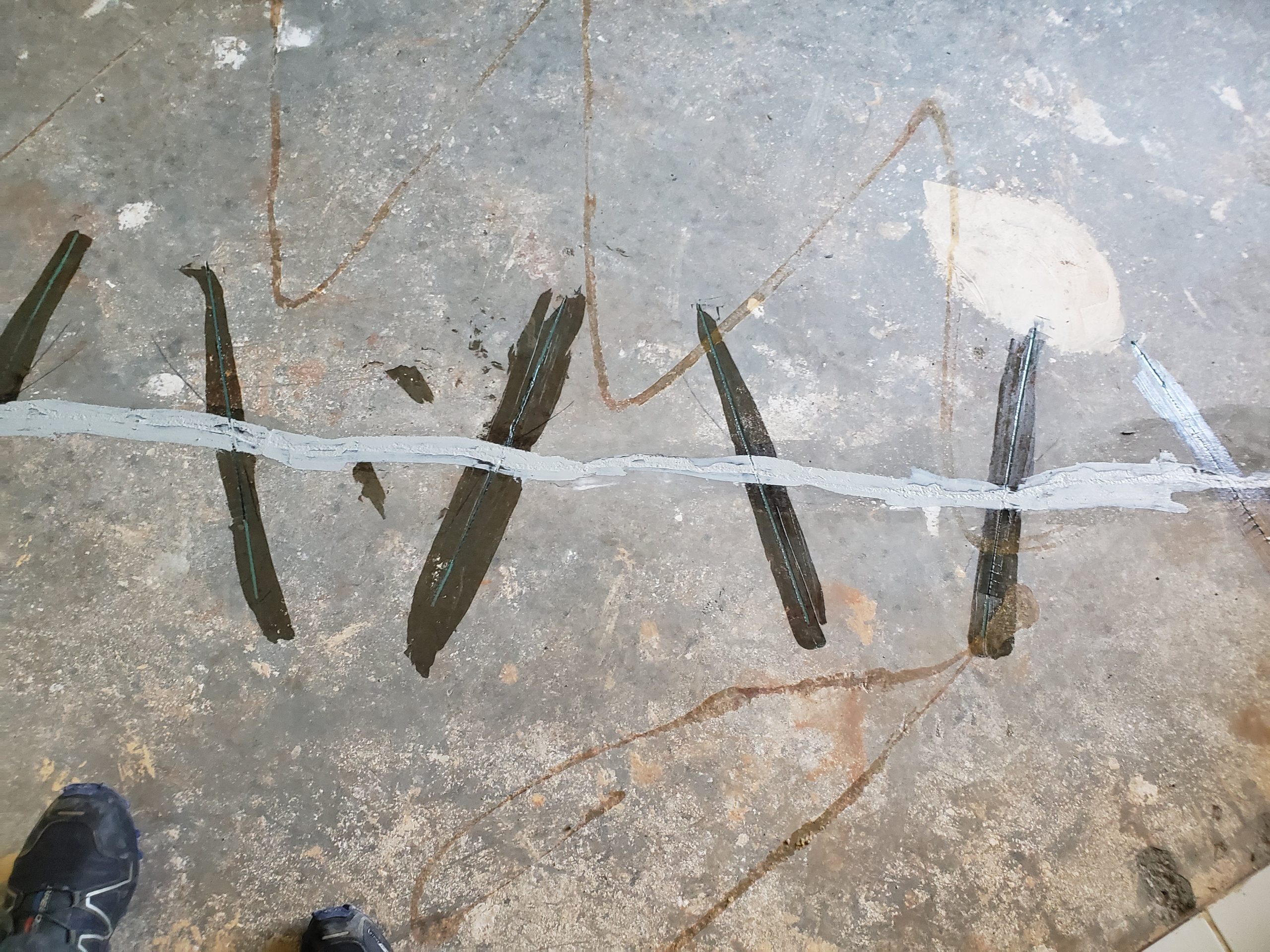
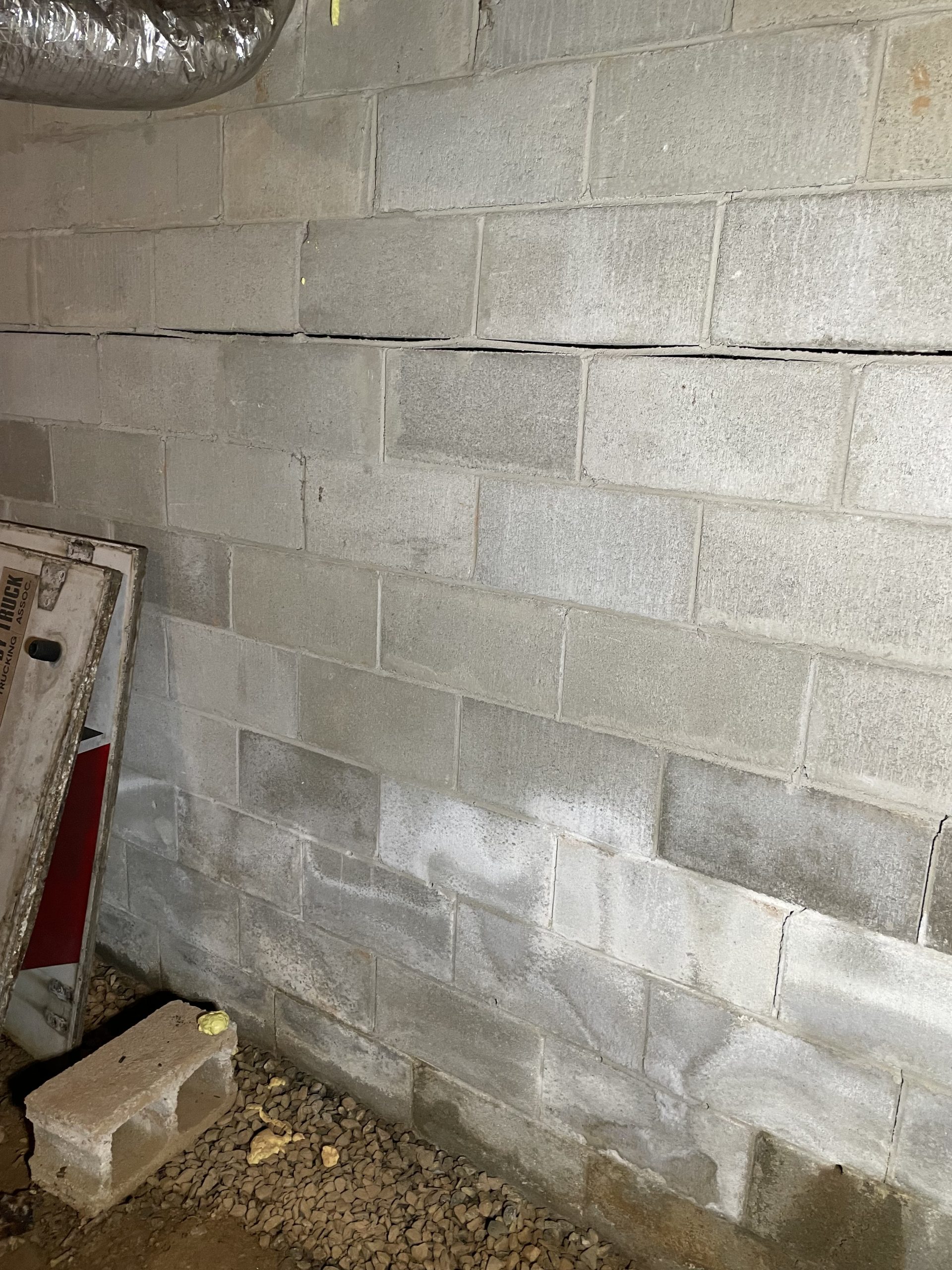
Epoxy injection is a structural repair. While it closes a crack as a water entry point, it does not fix broader water intrusion caused by multiple entry points, porous masonry, or wall-floor joint seepage.
If you’re dealing with water beyond a single crack, a waterproofing plan may be needed alongside the structural repair.
Bouncy, Sloping Floor Repair FAQs
Usually not for standard residential installs, though larger scopes may require it depending on permitting.
Straps can be used when the substrate is sound enough to bond to; epoxy injection is typically not used the same way on block walls.
It structurally seals a crack and removes it as a water pathway, but it’s not a whole-basement waterproofing system.
No. They stabilize the wall in its current position. For correction, anchors or tiebacks are typically used.
They are designed to permanently stabilize and prevent further inward movement when installed correctly.