


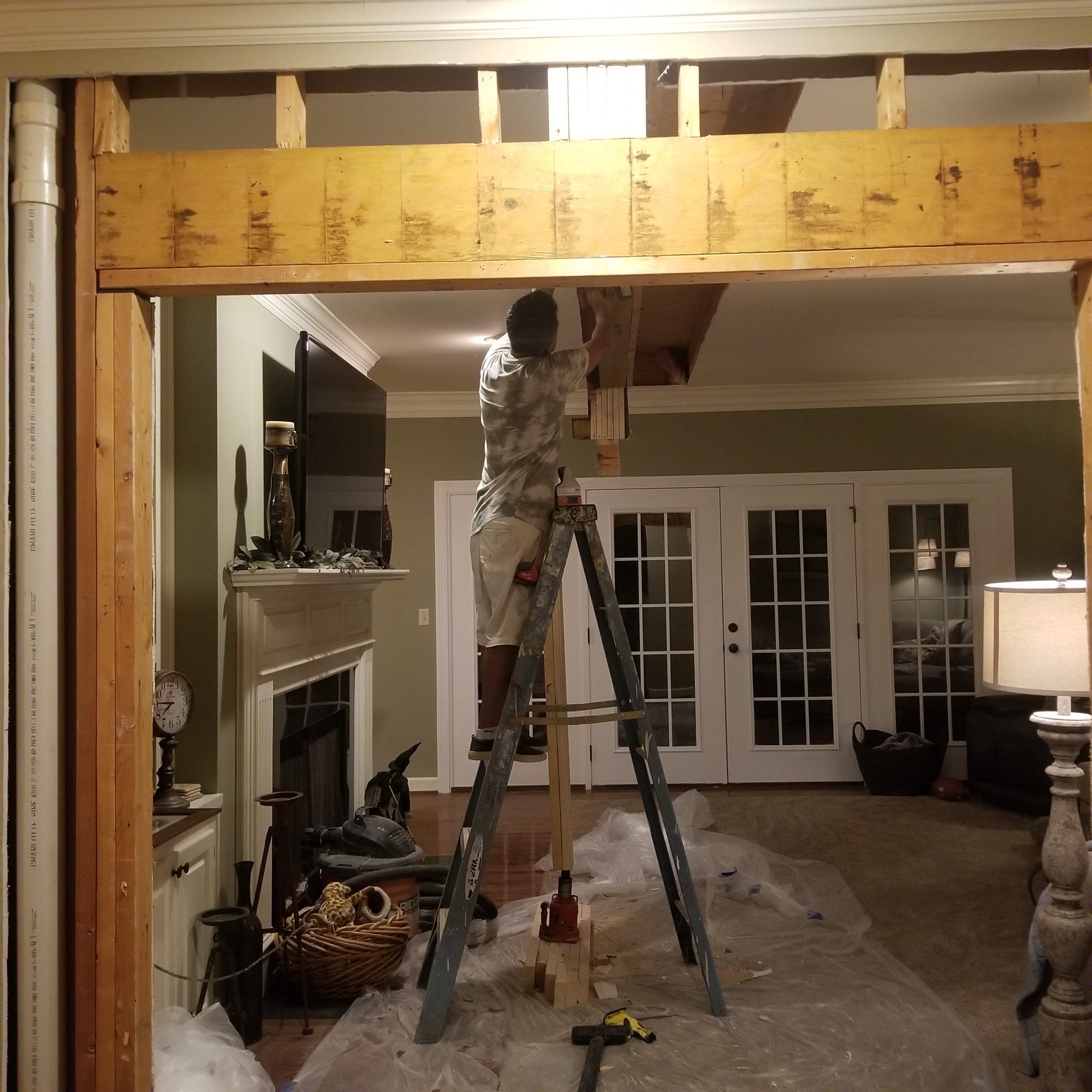
Load-Bearing Wall Removal & LVL Beam Installation
Sometimes a wall is the only thing standing between you and the layout you actually want. If you’re trying to open up a kitchen, widen a living space, or create that clean sightline from room to room, we can help you do it the right way, without compromising the structure.
We specialize in load-bearing wall removal and engineered beam installation, including LVL beam installation and structural header installation for widened openings.
Why You Can’t “Just Knock It Out”
When a wall is load-bearing, it’s carrying weight from the floor above and/or the roof. Removing it without a proper plan can lead to sagging, cracking, and structural movement.
A safe load-bearing wall removal requires:
get a free quote
How Load-Bearing Wall Removal Works (The Right Way)
Step 1 – Evaluate & Plan
We determine whether the wall is load-bearing and what it supports. In many cases, a structural engineer is involved to confirm sizing and design requirements—especially for larger spans or complex layouts.
Step 2 – Temporary Support
Before removing the wall, we install temporary support so the structure above remains stable throughout the project.
Step 3 – Beam Installation
We install an engineered beam designed for the load. Common beam types include:
- LVL beams (Laminated Veneer Lumber)
- Steel I-beams
- Wood/steel combinations (when appropriate)
This is the core “fix” that makes open concept wall removal possible.
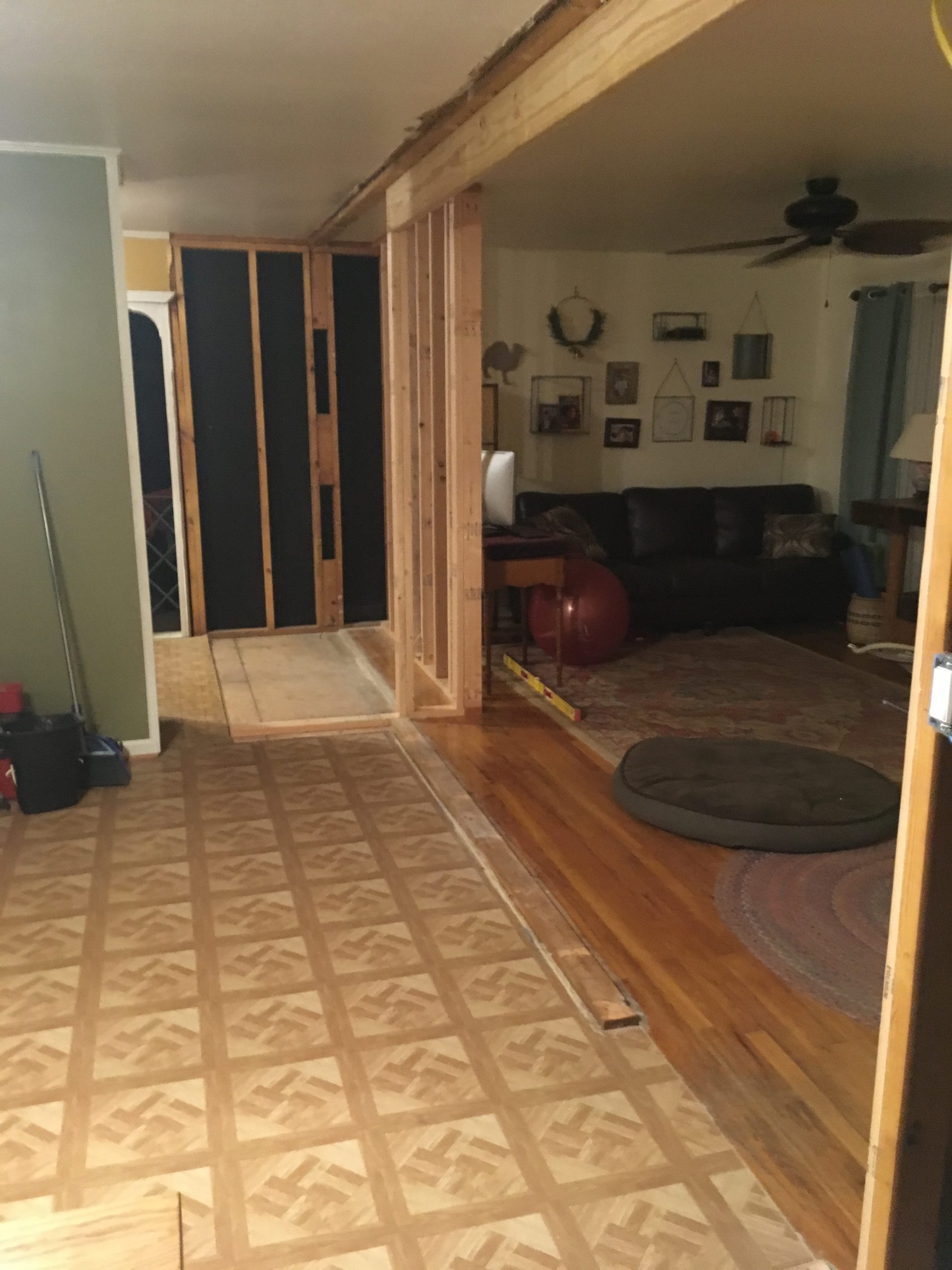
Other Things That May Be Involved
Load-bearing wall removal often isn’t just framing—it can include coordination with other trades, such as:
A safe load-bearing wall removal requires:
We’ll help you understand what’s included in the structural scope and what to plan for afterward.
Flush Beam vs Drop Beam
Drop beam (beam below the ceiling)
The beam sits under the framing above. This is often the simplest structural approach and is a strong solution for many projects.
We’ll explain what’s realistic based on your framing, span, and layout goals.
Flush beam (Recessed Beam inside the ceiling)
For a cleaner look, the beam can sometimes be recessed into the ceiling. That usually requires:
- Cutting back ceiling framing to accommodate the beam
- Hanging the framing from the beam afterward
- More labor and coordination, but a more “open” finish
LVL Install and Wall Removal FAQs
Those often need rerouting. We’ll help you plan for trade coordination before the wall comes out.
Timeline depends on scope and finish coordination, but structural portions are often completed efficiently once the plan is set.
Many projects do, especially larger spans or complex loads. Engineering ensures the beam size and support design are correct.
Sometimes. A flush (recessed) beam requires cutting back framing and hanging it from the beam, and it depends on your structure and span.
A load-bearing wall supports roof or floor loads above. We evaluate framing direction, load paths, and supports to confirm.