

Wood Rot Repair: Signs, Causes, and Structural Fixes
Wood rot is a common cause of structural damage in Carolina homes, especially in crawlspaces and framing near moisture. If you’ve noticed soft, crumbling, discolored, or spongy wood, the key is to identify whether it’s dry rot or wet rot, how far the damage goes, and what repairs are needed to restore strength.
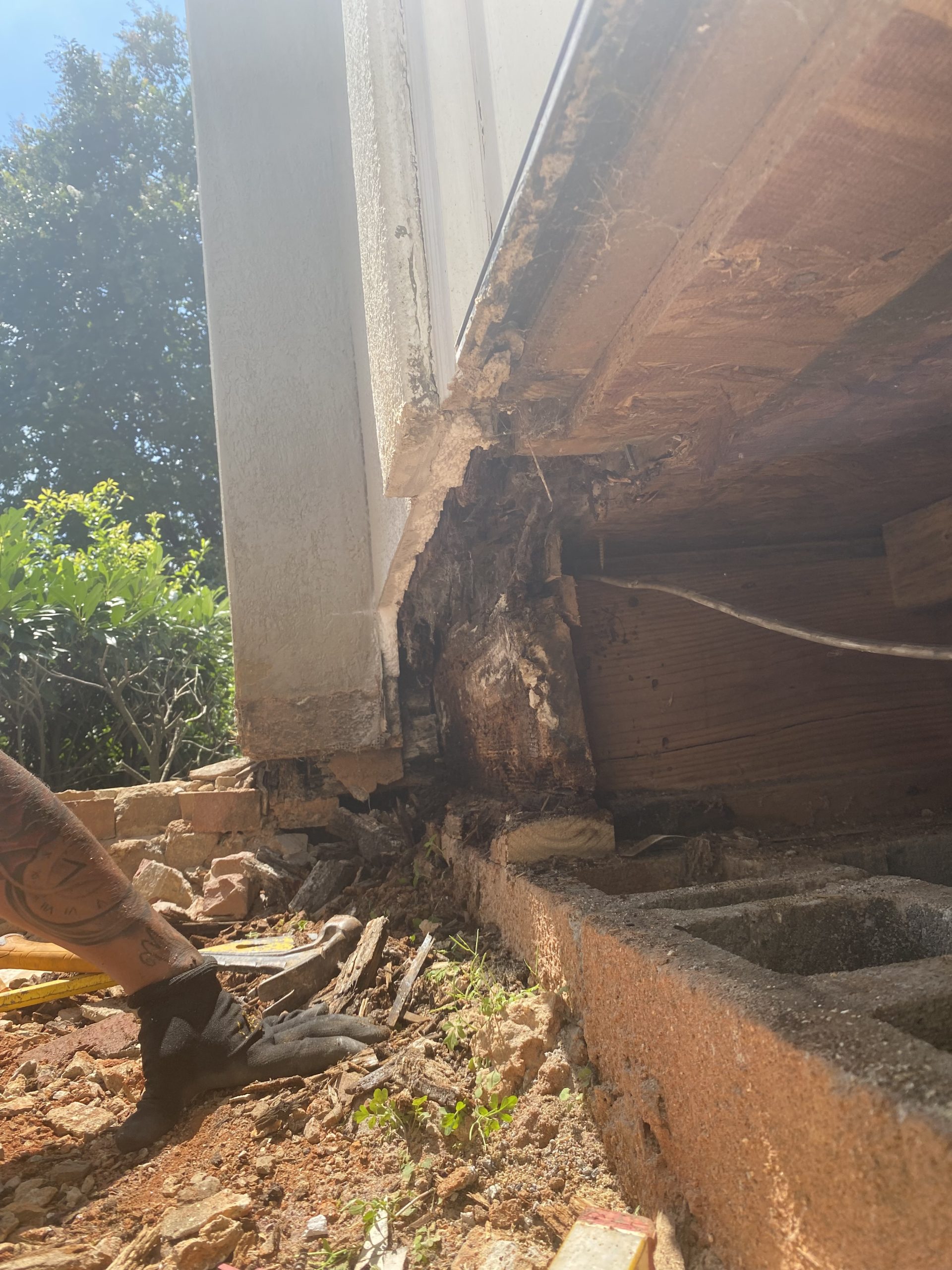
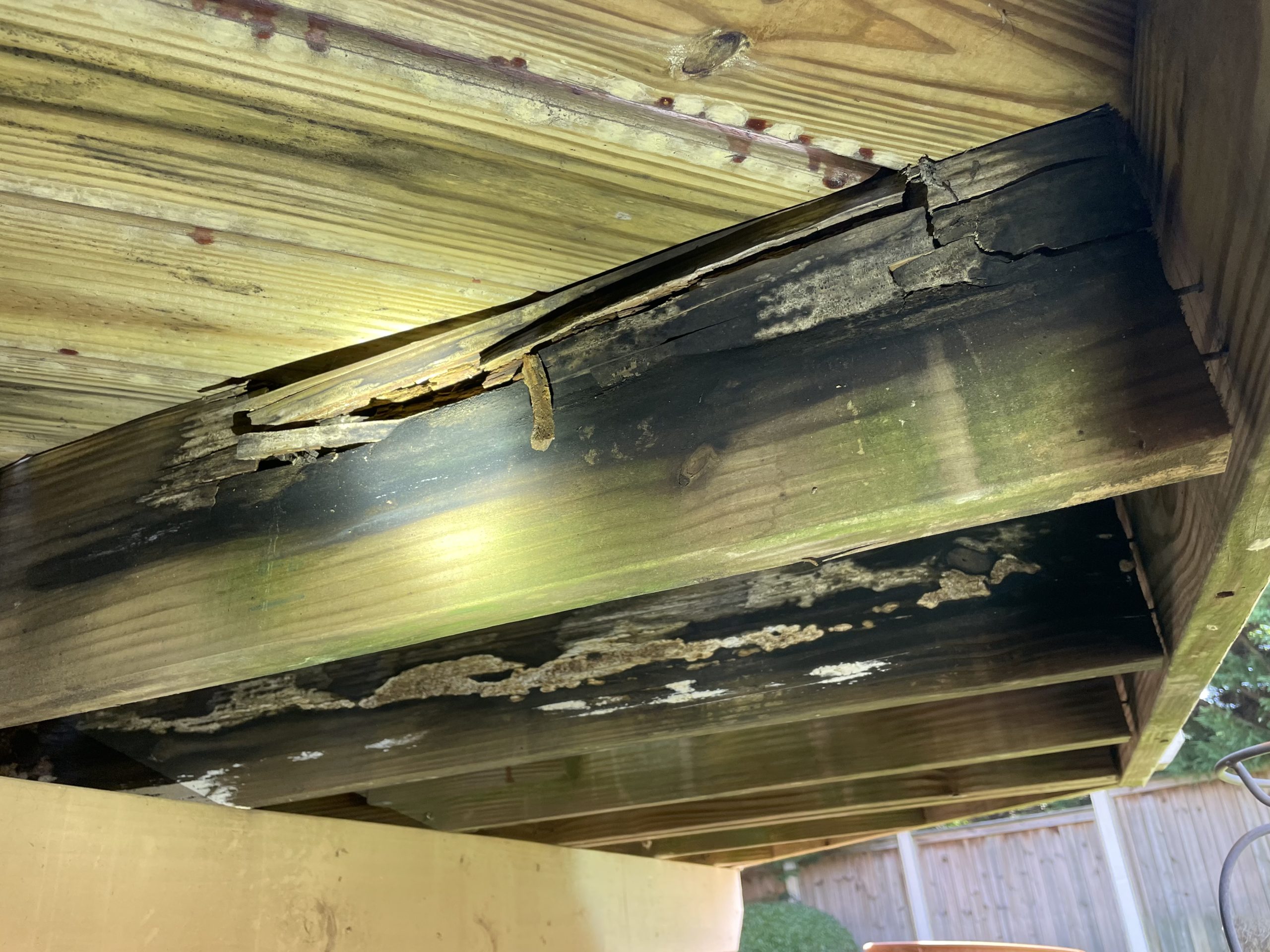
We inspect and repair wood rot under houses, including rotted floor joists, support beams, sill plates, and other compromised framing members.
Why Wood Rot Is a Structural Problem
Rot is not just “ugly wood.” It’s a loss of strength. As framing weakens, homeowners often notice:
- bouncy or uneven floors
- sagging or sloping areas
- soft spots underfoot
- doors sticking or shifting
- cracks inside walls or near openings (sometimes)
If you repair the drywall or flooring without repairing the rot, the movement often continues.
get a free quote
Dry Rot vs Wet Rot: What’s the Difference?
Dry Rot (Brown Rot)
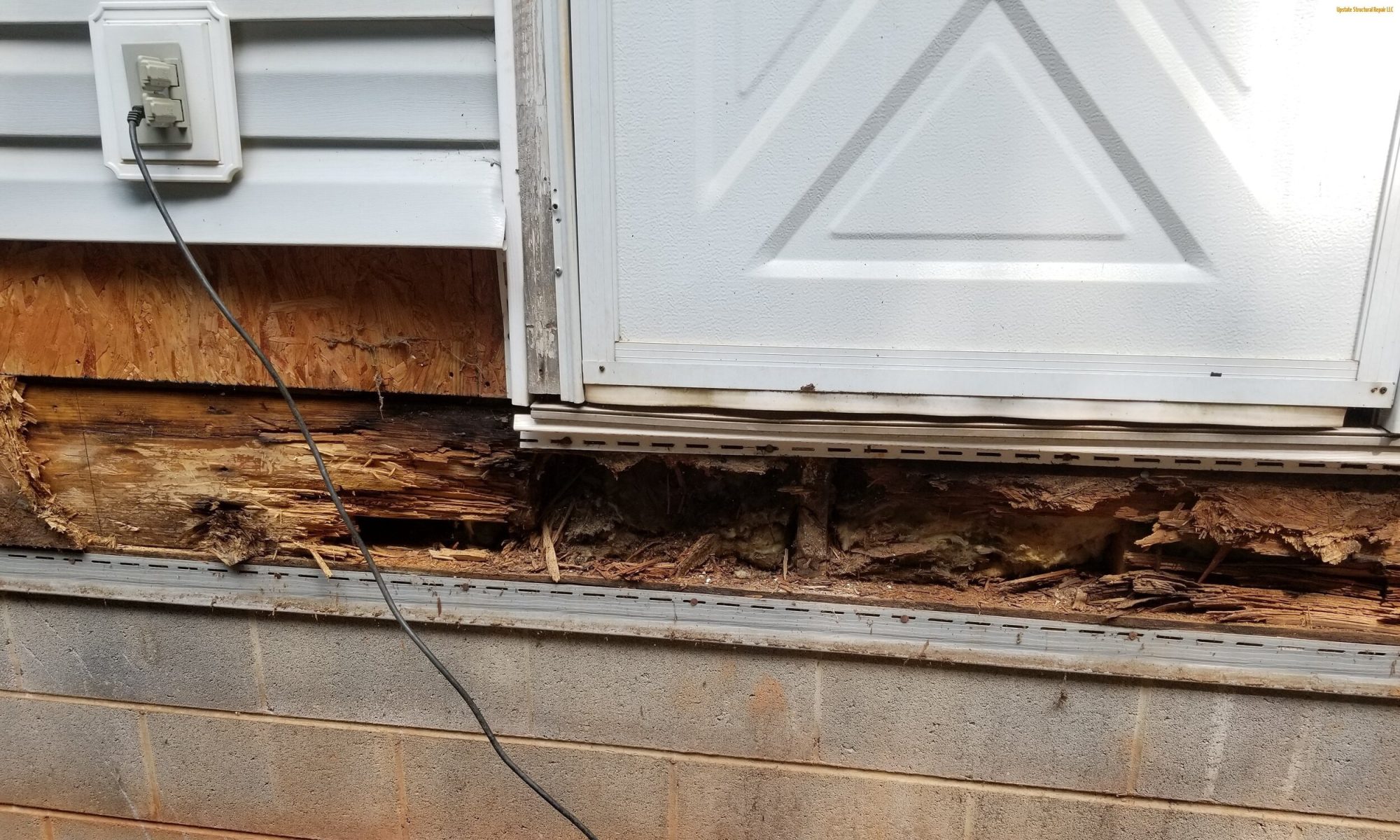
Despite the name, dry rot starts when wood is damp. It’s dangerous because it can cause major strength loss and may continue where humidity stays elevated. Dry rot can significantly reduce the load-carrying capacity of structural members. Signs of dry rot include:
Wet Rot
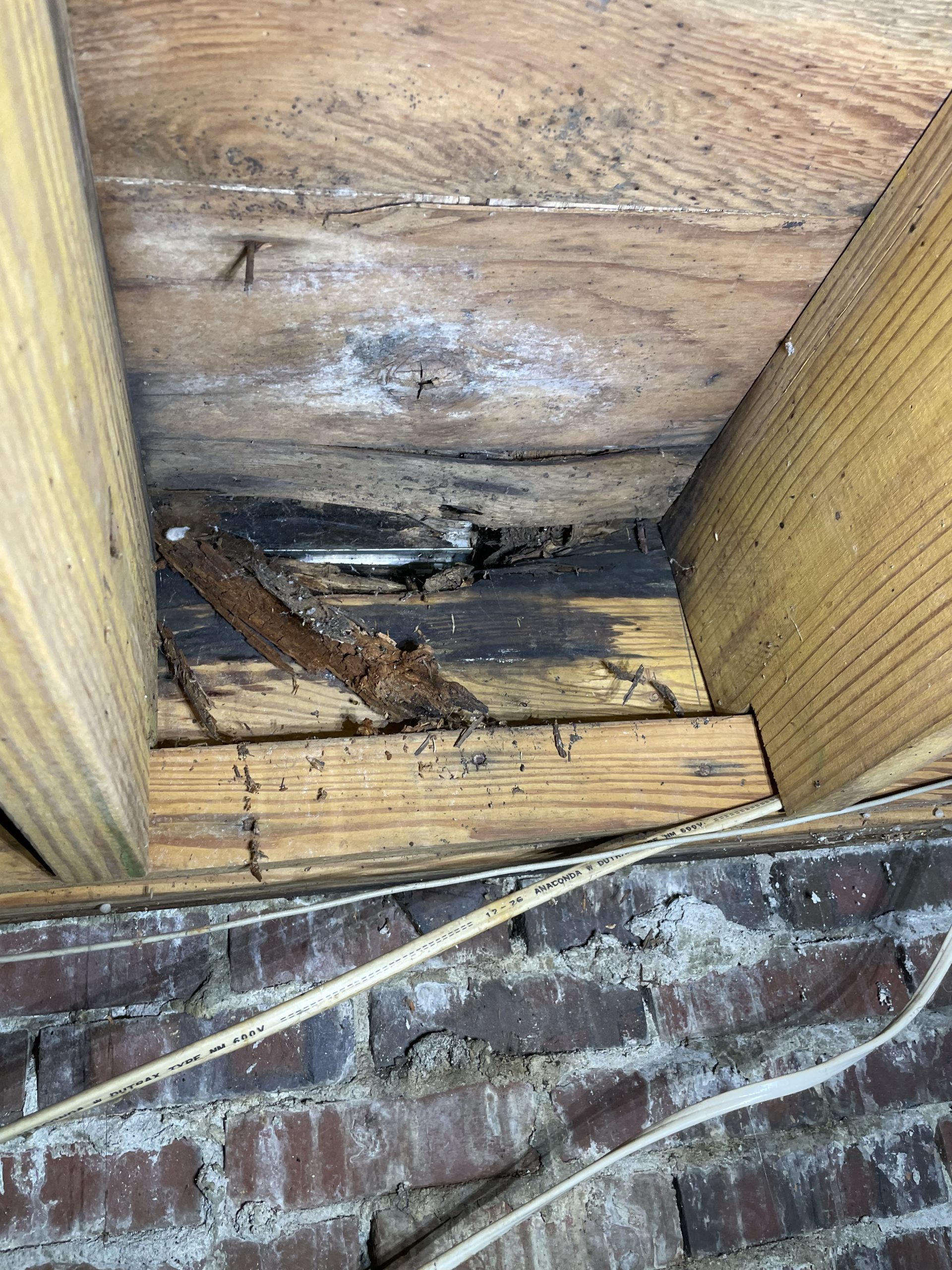
Wet rot requires ongoing moisture, usually from a persistent leak or chronic wet conditions. It’s often localized but can still cause serious damage where it occurs. Wet rot can destroy joists, beams, and supports in the exact area that stays wet. Signs of wet rot include:
What Causes Wood Rot?
Wood rot is caused by fungi that break down the wood fibers that give framing its strength. The biggest driver is moisture. When wood stays damp long enough, rot can develop and spread. Common moisture sources:
Once rot starts, it can weaken joists, beams, rim/band joists, sill plates, and subfloor framing, often before damage is obvious.
Wood Rot Repair: How It’s Fixed the Right Way
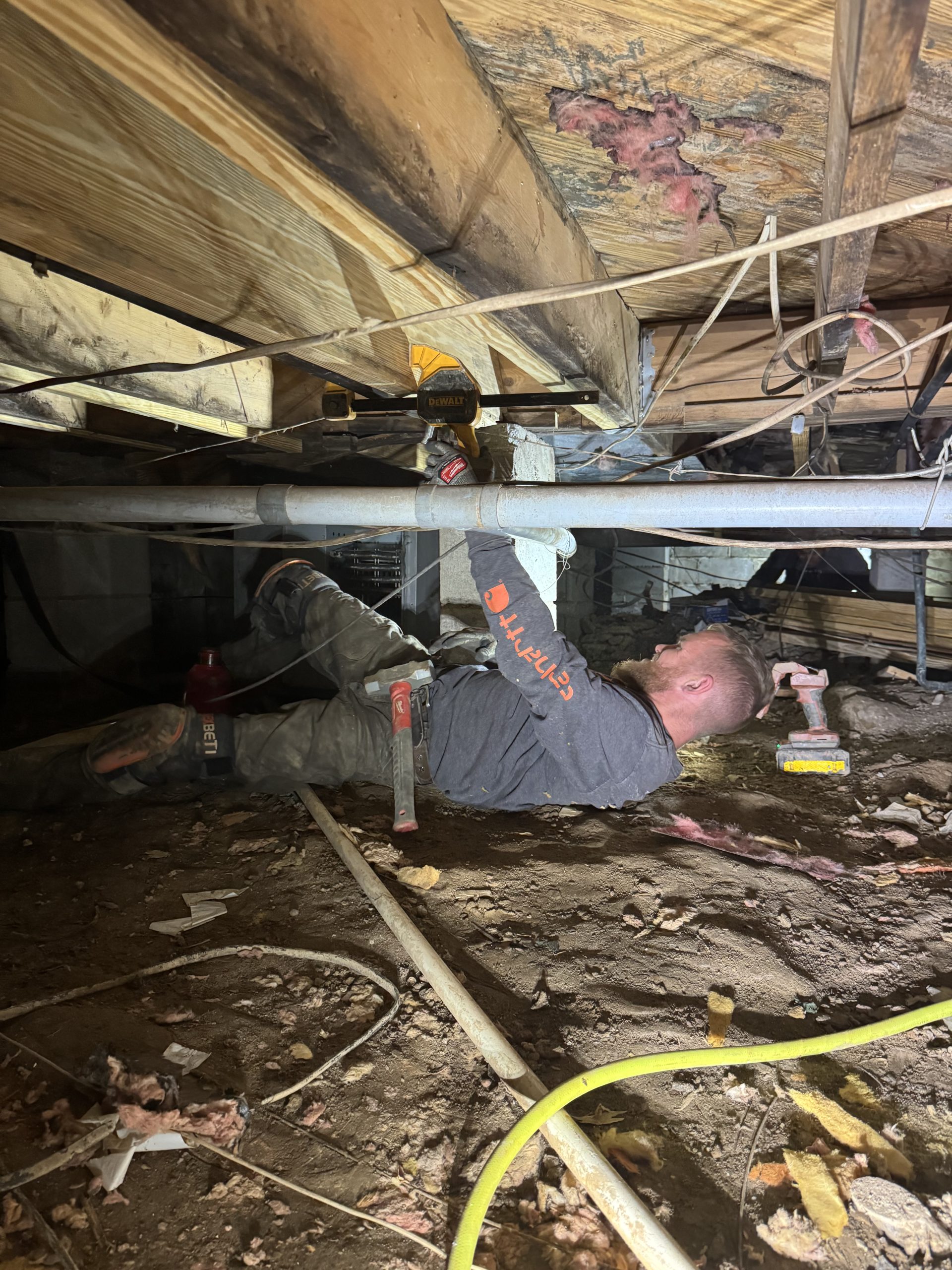
Effective wood rot repair requires two things:
- eliminate the moisture problem
- repair or replace the compromised structural wood
Step 1 – Identify and address the moisture source
Rot will return if moisture isn’t controlled. We’ll point out what needs to change (leaks, drainage, humidity drivers) so the repair lasts.
Step 2 – Inspect the extent of structural damage
We assess which members are compromised and which are load-bearing. Common repair areas include:
- rotted floor joists
- support beams / girders
- sill plates
- rim/band joists
- damaged subfloor framing members
Step 3 – Remove and replace compromised framing (as needed)
If a joist, beam, or plate has lost integrity, it needs repair or replacement to restore structural strength.
Step 4 — Reinforce support where needed
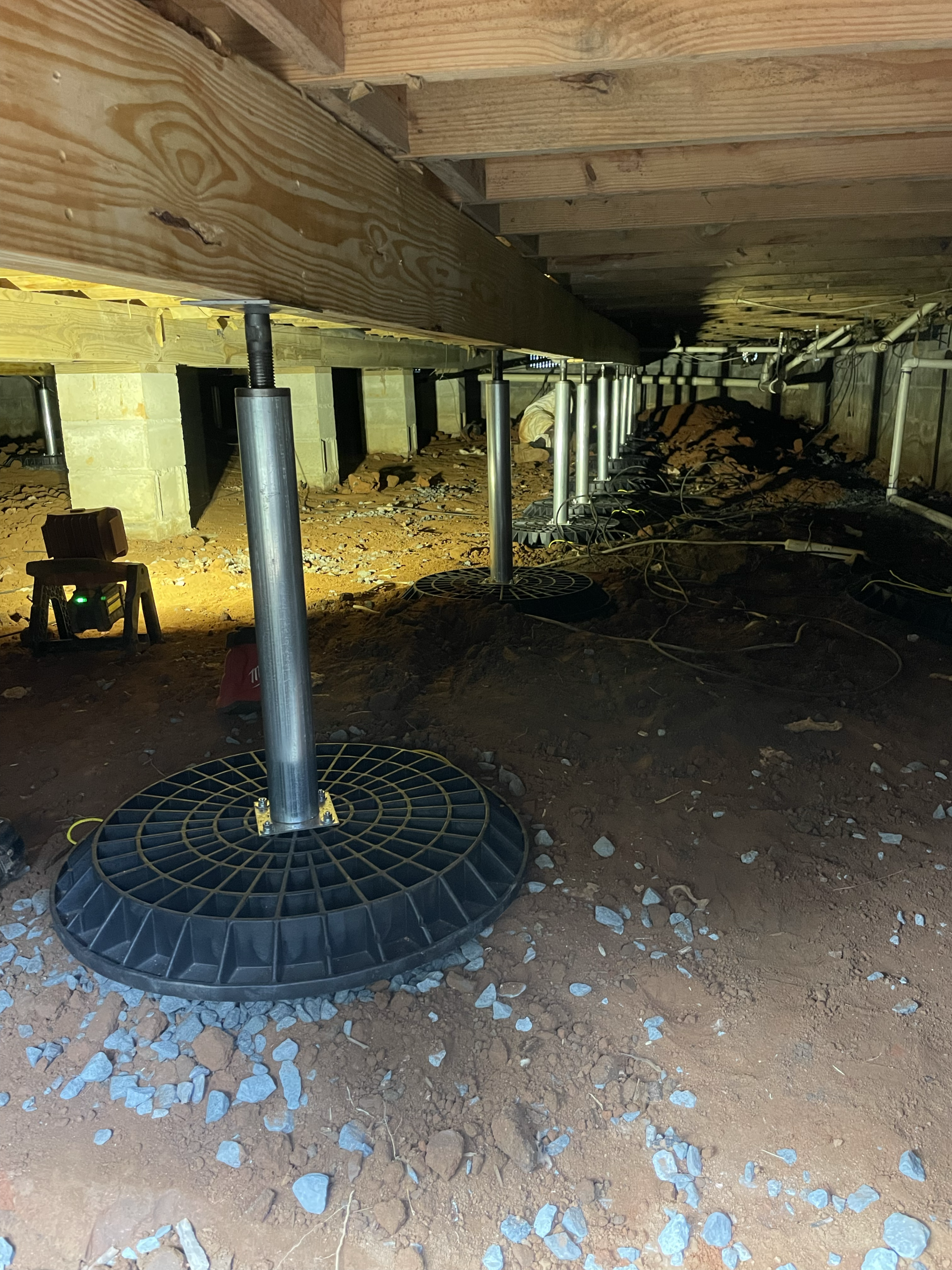
In some cases, additional support (posts/jacks/beams) is recommended after replacement to restore stability and reduce future stress.
Dry Rot & Wet Rot Repair FAQs
Often in crawlspaces or framing near moisture sources like leaks, high humidity, or poor drainage.
It can if the moisture source isn’t corrected. Repair plans should include moisture control recommendations.
If it has lost strength, replacement is usually required. We inspect to determine what’s structurally sound vs compromised.
Yes. Rot reduces structural stiffness and load capacity, which can lead to bounce, dips, and sagging.
Dry rot can persist where humidity stays elevated; wet rot requires ongoing saturation. Both can weaken structural wood.
What We Install
We use adjustable steel floor jacks/support posts rated for over 10,000 lbs, installed on a permanent composite footer base that sits on a gravel footing. This system is backed by an ICC rating, meaning it has been tested to meet load and building code requirements.
Dry Rot & Wet Rot Repair FAQs
Often in crawlspaces or framing near moisture sources like leaks, high humidity, or poor drainage.
It can if the moisture source isn’t corrected. Repair plans should include moisture control recommendations.
If it has lost strength, replacement is usually required. We inspect to determine what’s structurally sound vs compromised.
Yes. Rot reduces structural stiffness and load capacity, which can lead to bounce, dips, and sagging.
Dry rot can persist where humidity stays elevated; wet rot requires ongoing saturation. Both can weaken structural wood.