

864-527-6330

Call For Quicker Scheduling

Our Regional Divisions

Our Regional Divisions

Framing Repair2026-03-30T11:00:06-04:00
USR band repair

How We Fix The Problem

  • 1

    You Receive A Free Inspection

  • 2

    We Diagnose The Real Issue

  • 3

    We Install A Permanent Solution

How We Fix The Problem

  • 1

    You Receive A Free Inspection

  • 2

    We Diagnose The Real Issue

  • 3

    We Install A Permanent Solution

Crawlspace Framing Repair: Sill Plates, Rim/Band Joists, Floor Joists & Girders

USR band repair

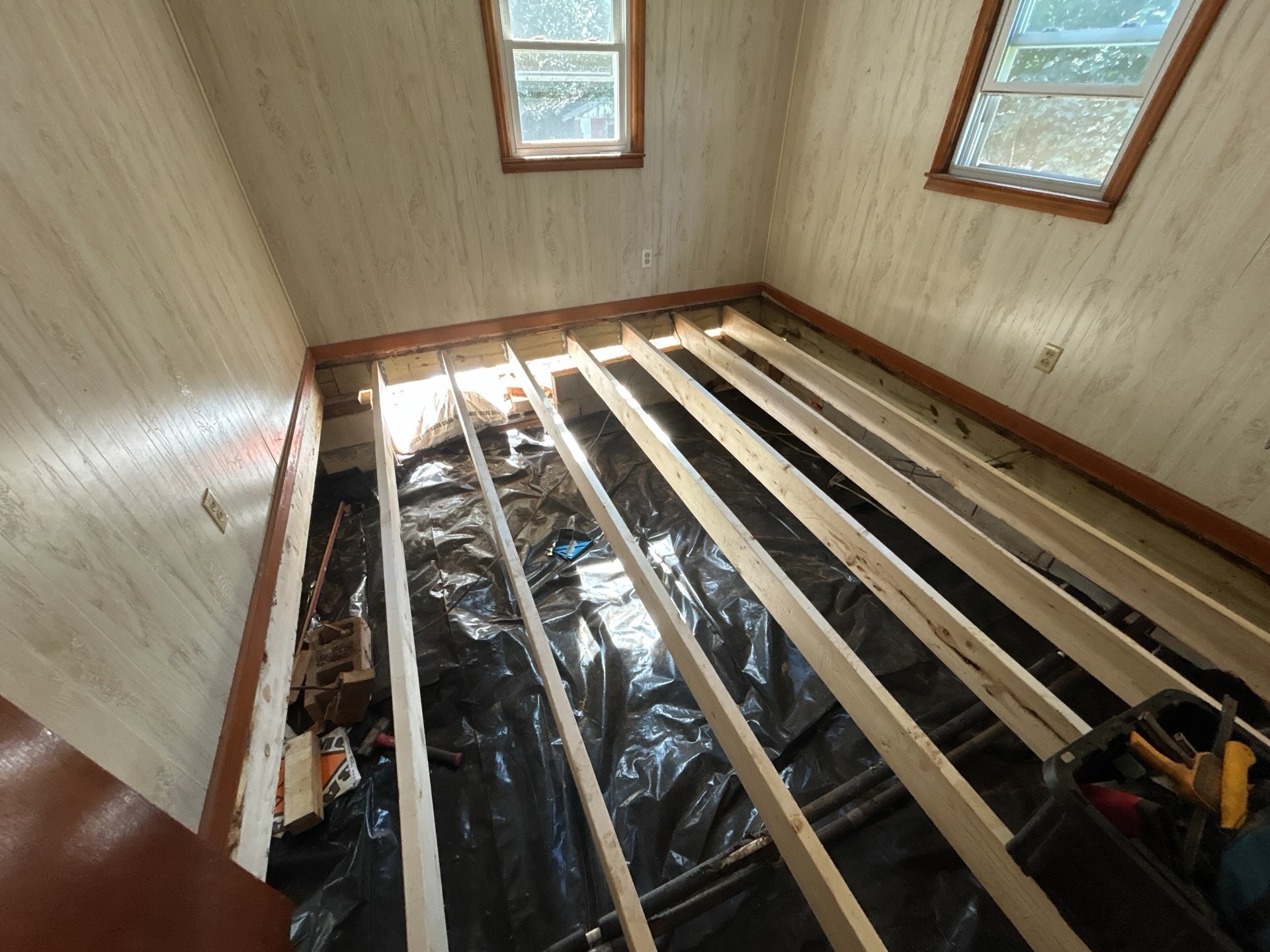
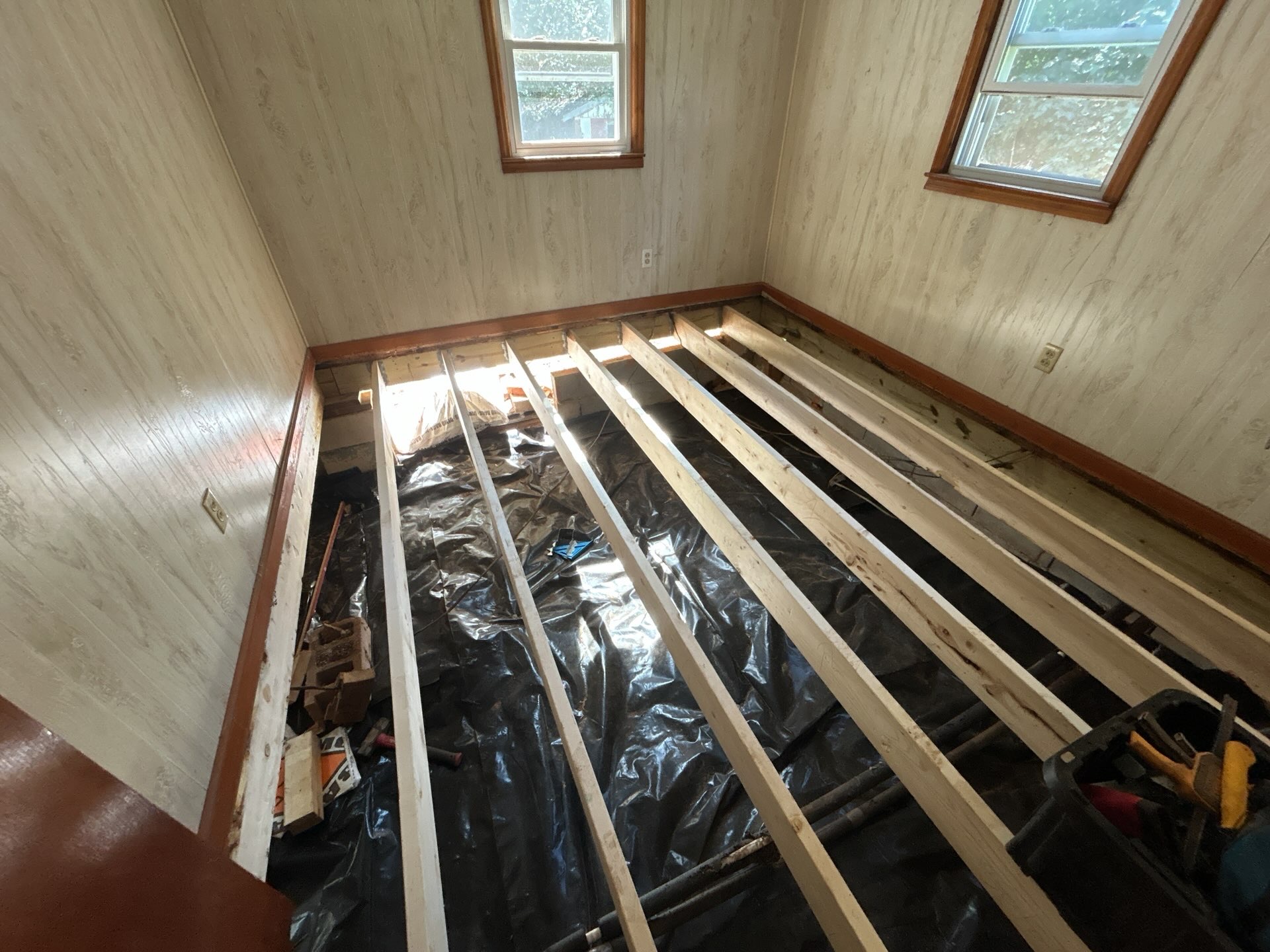
The floor framing beneath your home is doing a job most homeowners never think about until something changes. When framing lumber in the crawlspace is damaged by moisture, wood rot, termite damage, or age, it often shows up inside the house as bouncy floors, uneven/sloping floors, doors that stick, and cracks around openings.

Crawlspace framing repair is one of our most common services in the Upstate SC and Western NC. We repair and replace framing components like sill plates, rim/band joists, floor joists, and girders, and we focus on fixing the cause of the movement, not just the symptoms.

get a free quote

What Are You Noticing?
Soft, Spongy Floors

Soft areas may indicate weakened joists/subfloor framing from moisture or insects.

Floor Joists >

Bouncy, Springy Floors

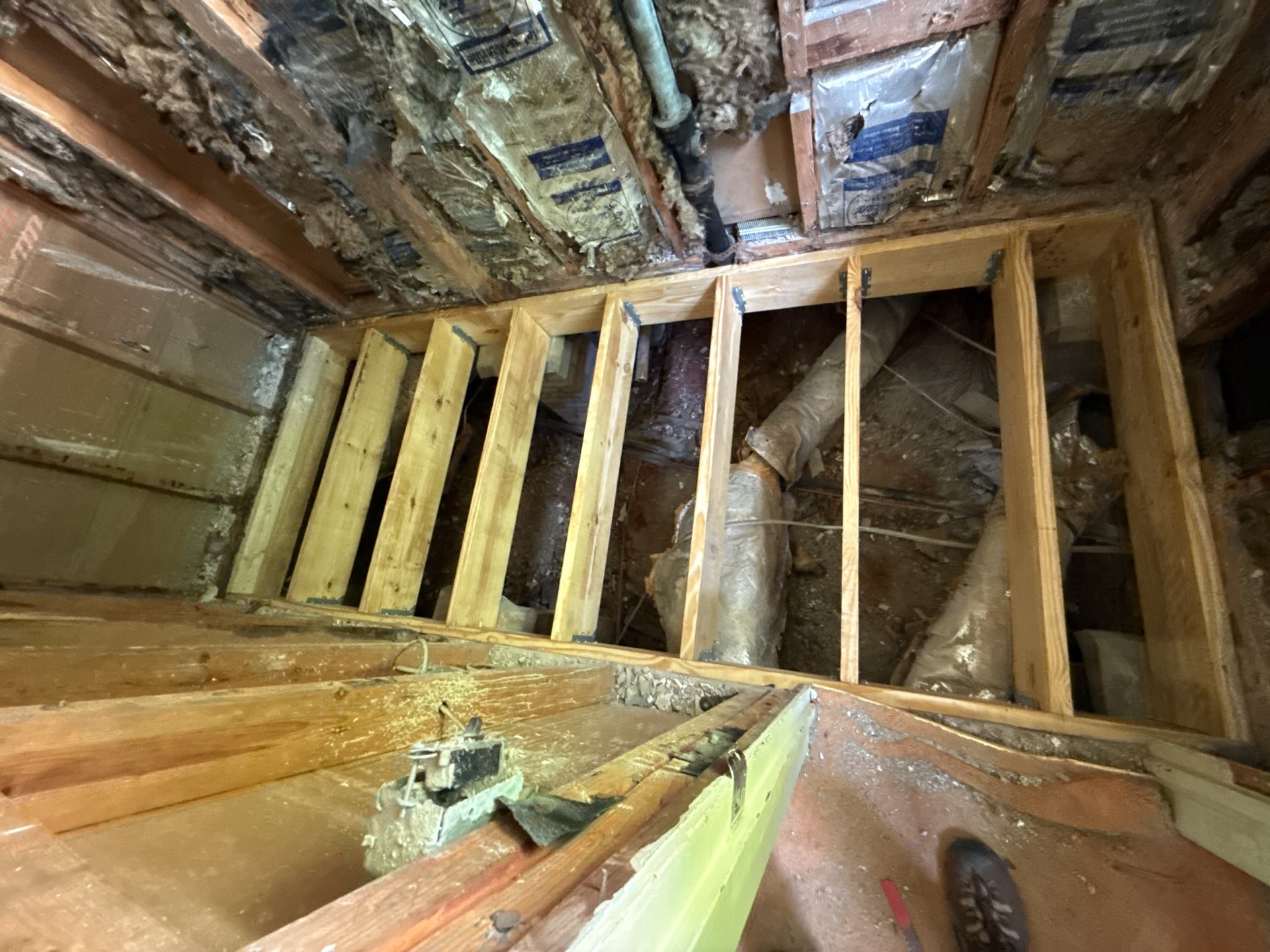
usr girder repair

Floors flexing underfoot often point to joist damage, long spans, or missing support.

Floor Joists >

Uneven, Sloping Floors

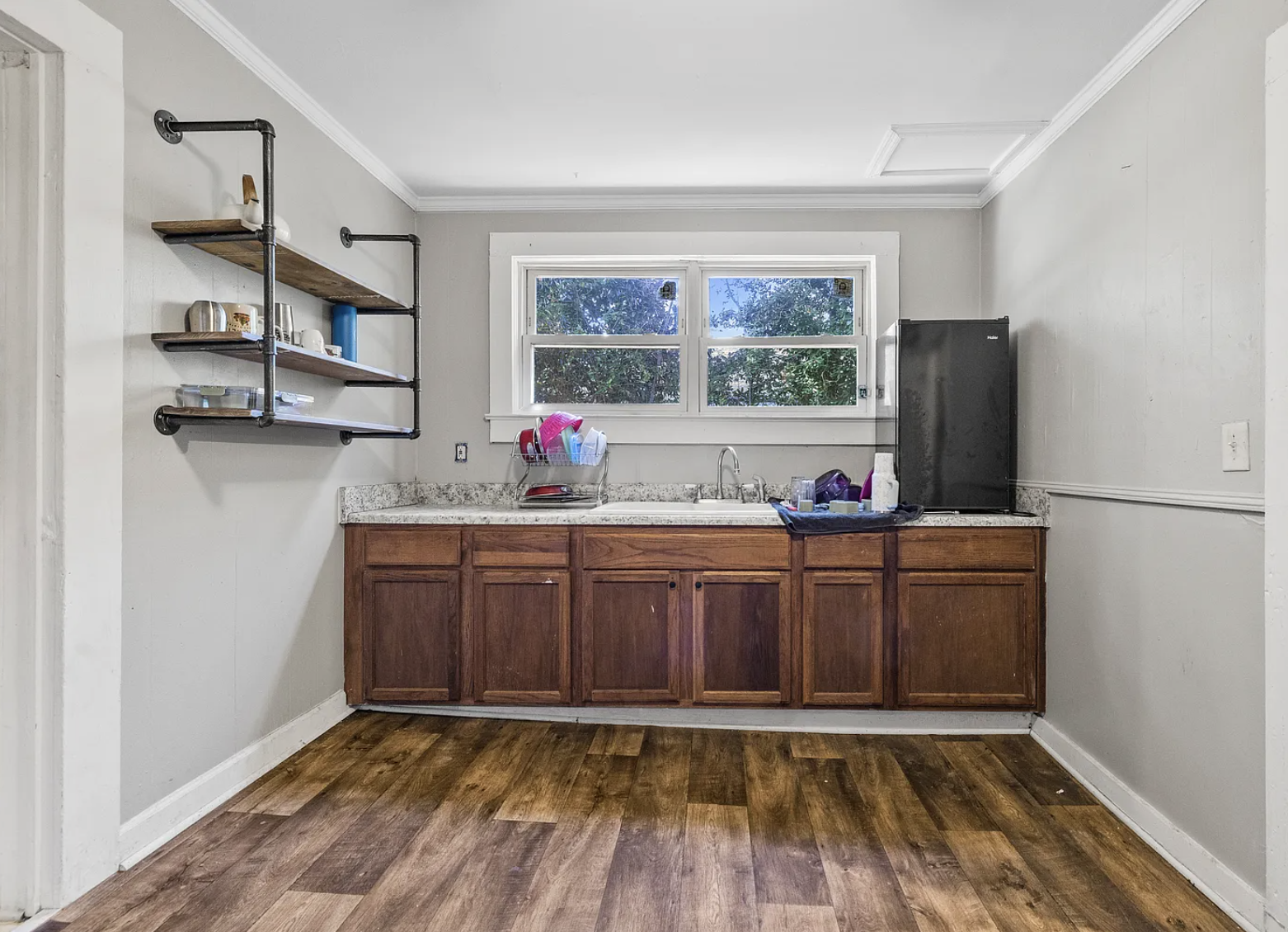
really bad sloping floor repair

A long slope across rooms can be tied to girder/beam issues or failing bearing points.

Girders & Beams >

Doors Sticking / New Interior Cracks

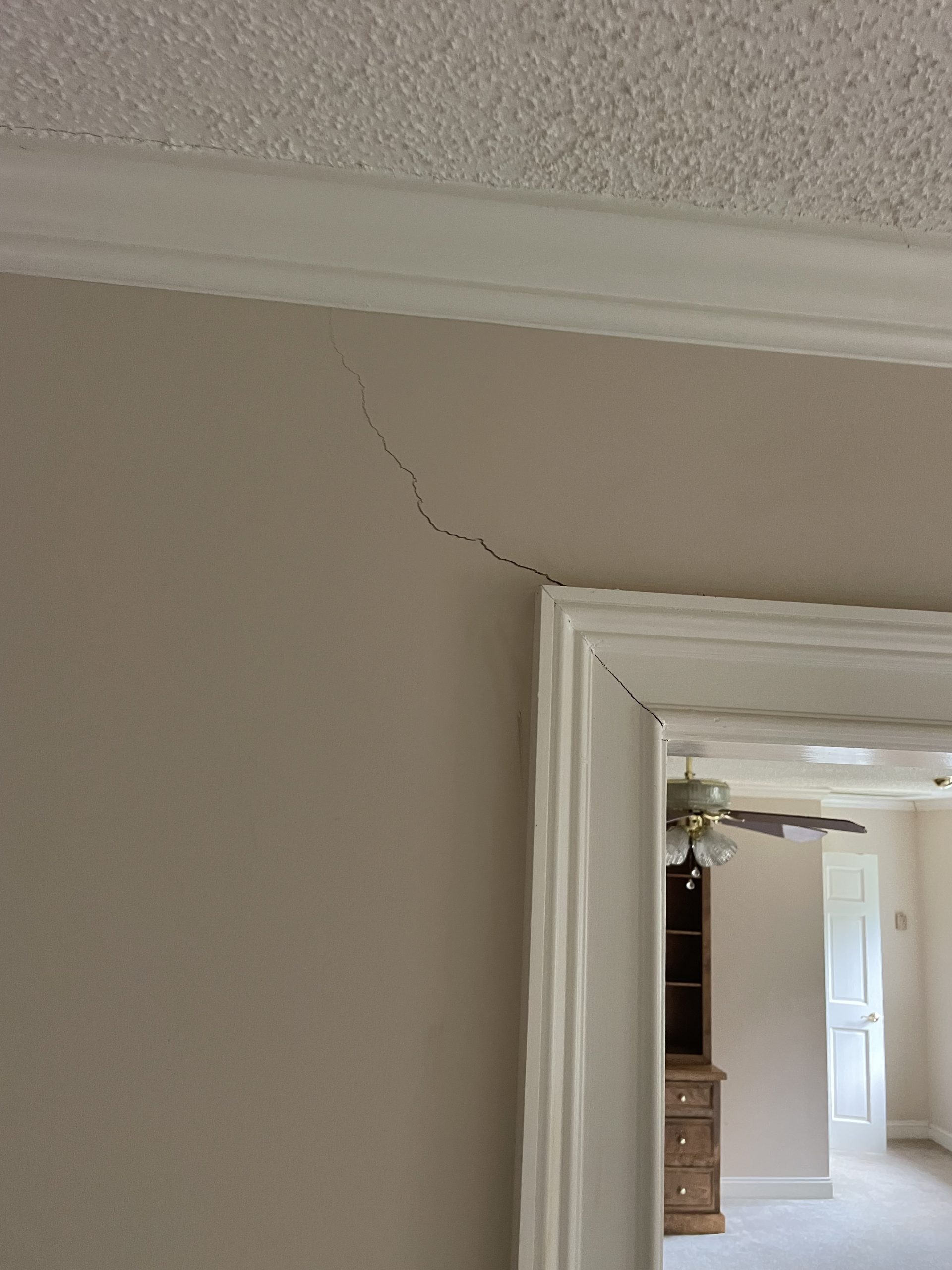
inside wall crack repair

Movement in the floor system can transfer stress into walls and openings..

Repair Options >

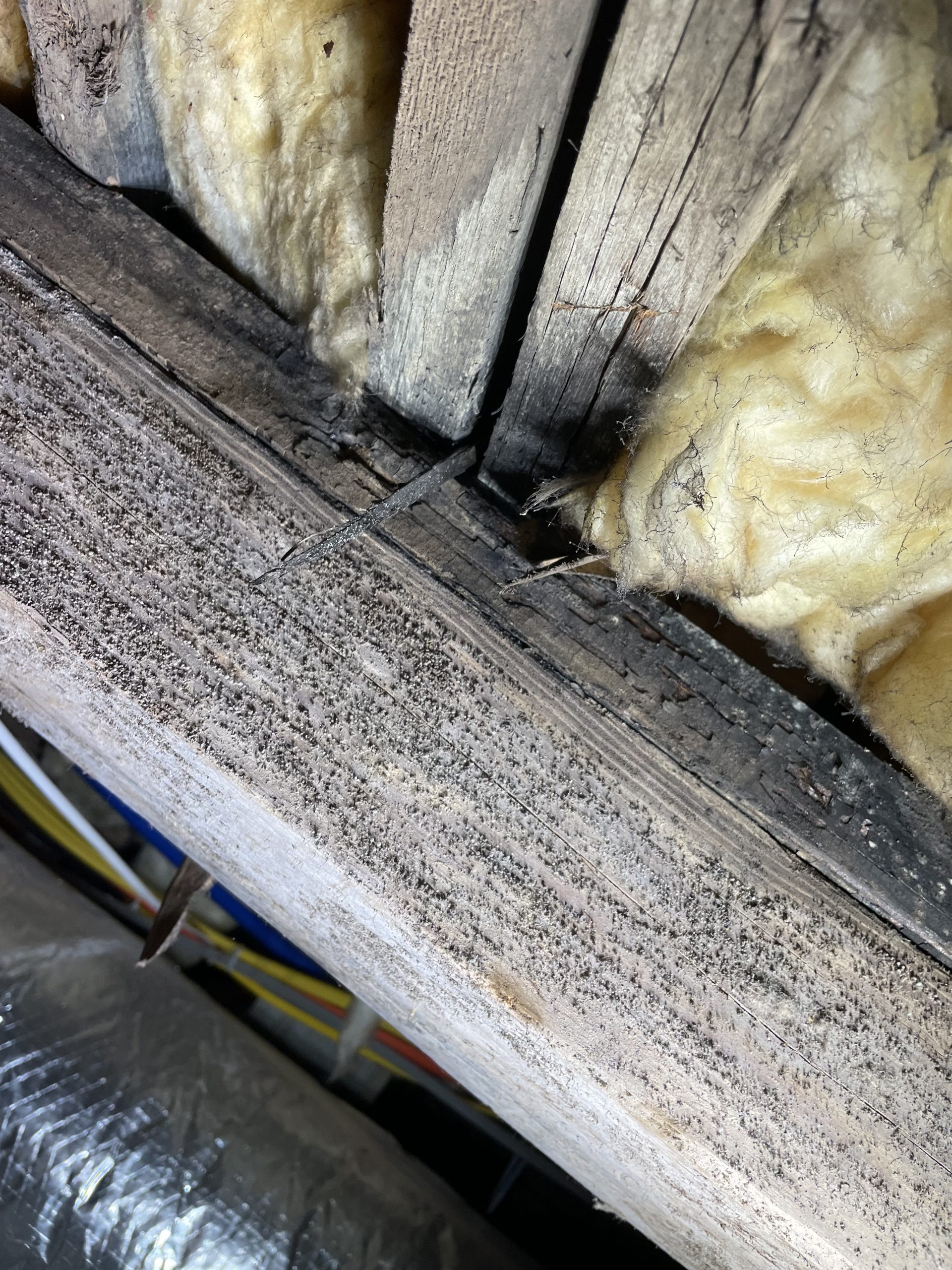
Visible Rot or Damaged Wood

Discolored, crumbling, or soft wood often means moisture-driven decay.

Wood Rot Repair >

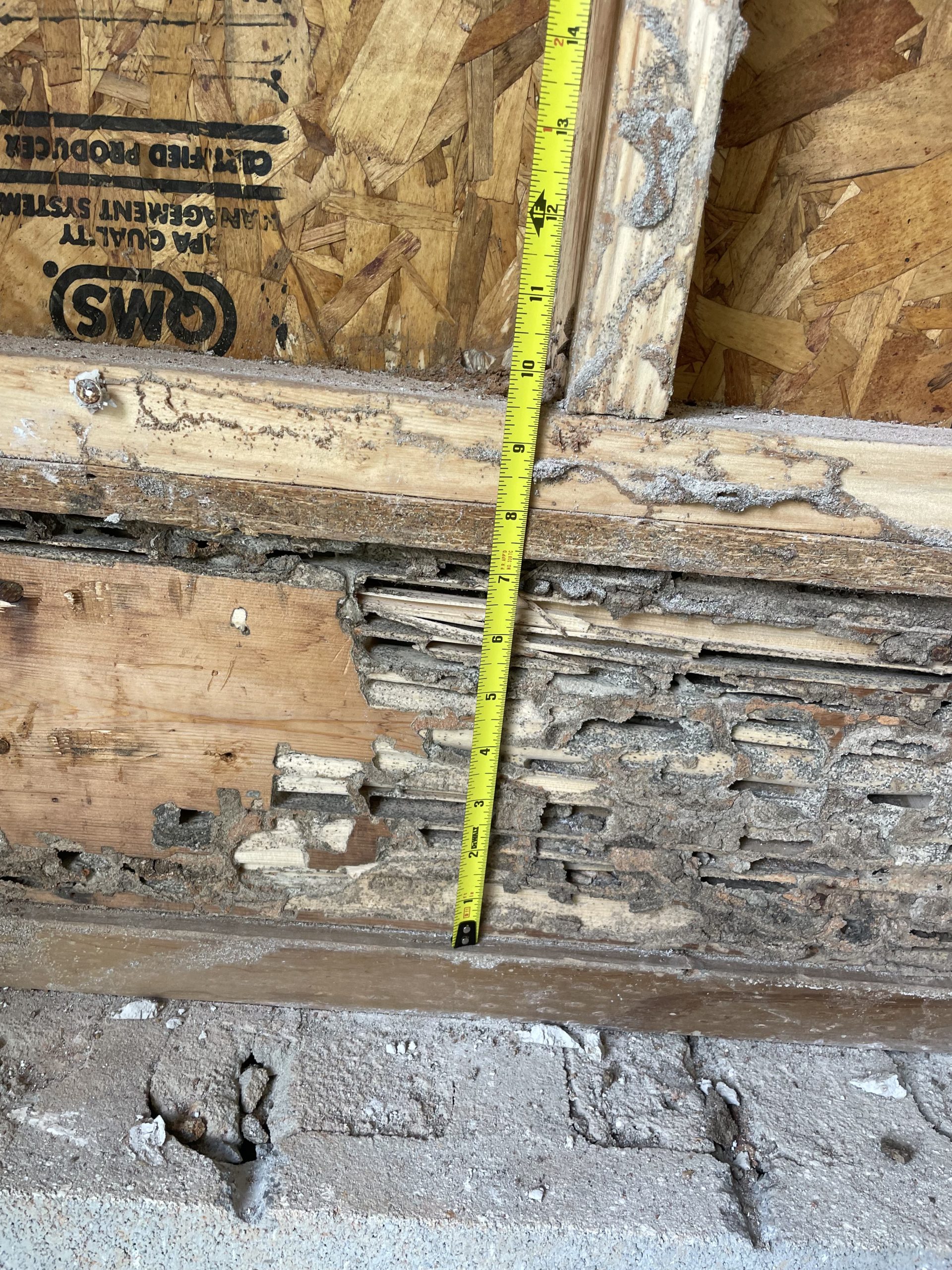
Termite Damage / Mud Tubes

measured termite damage USR

Termite activity can hollow out and weaken structural wood from the inside.

Termite Damage Repair >

Framing Parts We Repair (Spoiler Alert, It’s Everything)

Sill Plate Replacement

Learn more about our sill plate repair >

Rim / Band Joist Repair

Learn more about our band & joist repair >

Floor Joist Repair

Learn more about our floor joist repair >

Girders / Support Beam Repair

Learn more about our girder/beam repair >

The Floor Framing System (Plain-Language Overview)

Framing components go by different names depending on region, contractor, and the era the home was built. If you’ve heard different terms from different people, that’s normal.

The framing under your home builds up in layers, starting where wood meets masonry and working upward. Damage to one component often affects everything above it, because the floor system works as a unit.

Sill Plates (Where Wood Meets Masonry)

The sill plate is a board laid flat on top of masonry wherever wood framing bears on it. At the perimeter of the home, it sits on the foundation wall. At interior masonry piers, it sits between the pier and the girder above.

Because masonry can wick and hold moisture, sill plates are required to be pressure-treated where wood bears on masonry. This transition point is one of the most common places we find rot or termite damage.

Why the sill plate matters

  • It’s the base transition between masonry and wood framing
  • It provides bearing for perimeter framing and/or interior beam supports
  • It’s one of the first places moisture-driven deterioration can begin

What happens when the sill plate fails

When a sill plate deteriorates from wood rot or termite damage, it can affect everything above it:

  • perimeter framing can lose a stable bearing surface
  • the floor edge can begin to shift or drop
  • walls above may show signs of movement over time

Common repair: sill plate replacement with proper support during the replacement, and a plan to address the moisture/pest driver that caused the damage.

Rim Joists / Band Joists (Perimeter of the Floor Frame)

Sitting on top of the sill plate at the perimeter is the band, forming the outer edge of the floor system. Floor joists attach to it, and exterior walls are built on top of it—so it plays a major role in transferring load down into the foundation.


This member has many names. You may hear it called:

  • rim joist
  • rim board
  • band joist
  • header joist
  • “band”

Because it sits near the exterior and close to grade in many homes, it is commonly damaged by wood rot and termites.

Why rim/band joists matter

  • Supports the ends of floor joists
  • Transfers exterior wall loads into the foundation
  • Deterioration here can impact both floors and walls

Common rim/band joist repairs

  • Supports the ends of floor joists
  • Transfers exterior wall loads into the foundation
  • Deterioration here can impact both floors and walls

Floor Joists (The “Ribs” of Your Floor)

Floor joists are the most numerous framing members in most crawlspaces. The subfloor, and everything above it, relies on them. Think of joists as the ribs of the floor system.

Joists are commonly dimensional lumber (2×8, 2×10, 2×12) or engineered products in newer homes.

Signs joists may be damaged or failing

  • bouncy / springy floors
  • soft or spongy spots
  • unevenness that gets worse over time
  • visible damage from rot or termites (when accessible)

Common floor joist repairs

  • floor joist repair and reinforcement
  • joist sistering (fastening a new joist alongside a compromised one)
  • floor joist replacement when damage is severe
  • stabilizing the system so movement doesn’t continue

Girders / Support Beams (Primary Interior Support)

A girder is the primary interior beam that supports a large portion of the floor system. It’s typically supported by piers or posts at intervals. Joists may rest on top of it or tie into it from the side.

You may also hear this called:

  • support beam
  • main beam
  • carrying beam
  • “beam”

Damage to a girder or its support points can affect a large section of the home, often creating wide-area bounce or long slopes.

Signs a girder/support beam issue may be present

  • slope or dip across multiple rooms
  • widespread bounce (not just one spot)
  • progressive movement over time
  • visible deterioration at bearing points

Common girder/support beam repairs

  • girder repair / reinforcement
  • support beam repair
  • replacement where needed
  • temporary shoring while repairs are completed (case-by-case)

What Damages Crawlspace Framing?

Moisture & Wood Rot

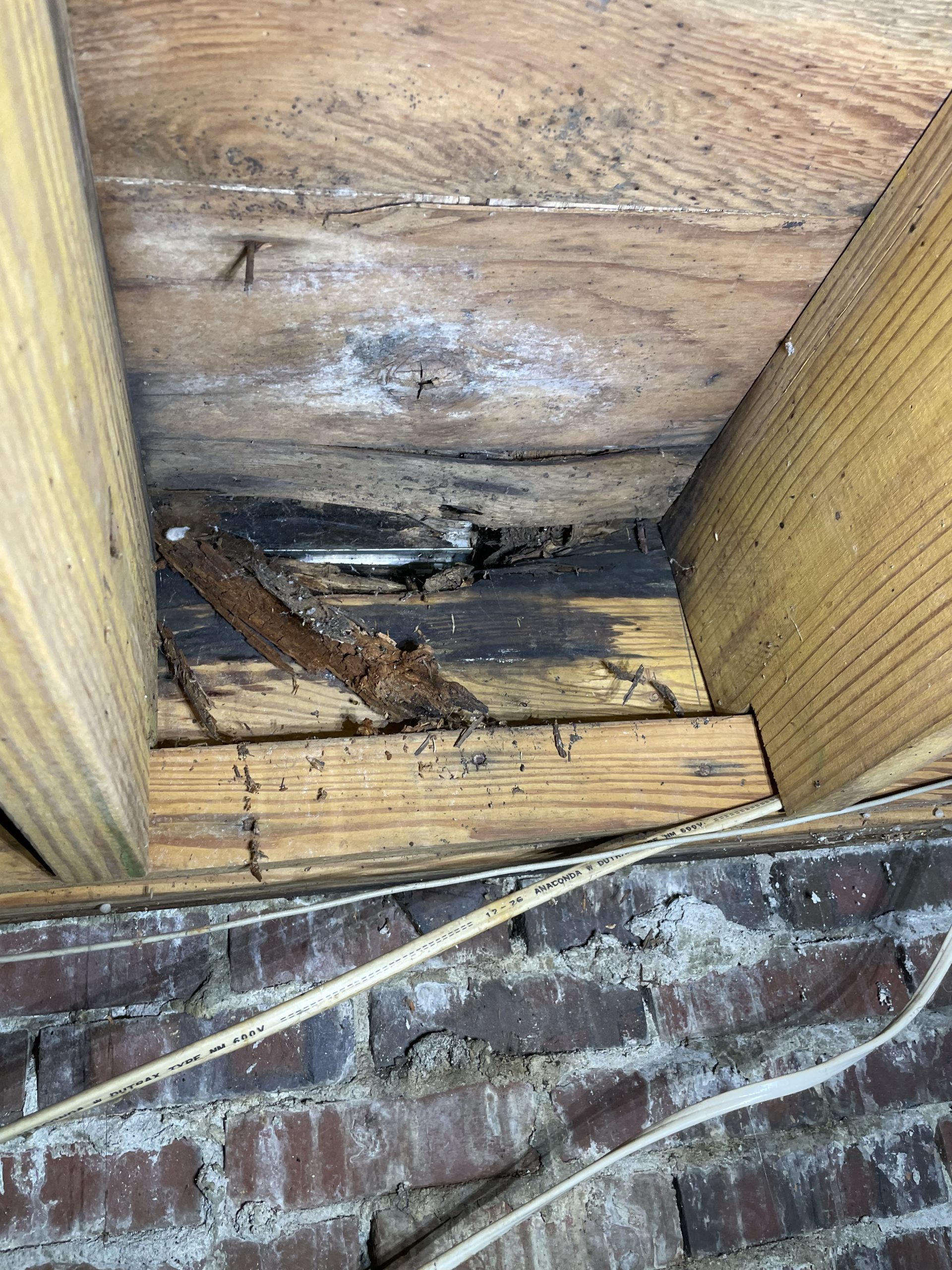
dry rot repair

When crawlspace humidity is high or bulk water is present, wood moisture content rises and fungal decay can begin. Over time, wood softens, loses strength, and may fail, especially in areas close to masonry like sill plates.

Learn more about moisture damage >

Insect Damage (Termite Activity)

measured termite damage USR

Termites and other wood-destroying insects can hollow out framing from the inside. Wood may look intact on the surface while losing structural capacity.

In both cases, damage is often hidden until symptoms show up inside the home, one reason crawlspace inspections are so valuable.

Learn more about termite damage >

Can Damaged Framing Be Repaired?

Yes. Sill plates, bands/rim joists, floor joists, and girders can all be repaired or replaced, but the complexity depends on the member involved and the extent of damage.

Common repair approaches (based on what we find)

  • Replace compromised lumber that has lost structural integrity

  • Sister or reinforce joists when appropriate

  • Repair/replace rim or band sections supporting joist ends and wall loads

  • Repair or stabilize girders that carry wide areas of the floor system

  • Temporary shoring where required to safely perform the repair

Important: the moisture source or pest issue that caused the damage must be addressed, or new lumber is exposed to the same conditions.
What We Install

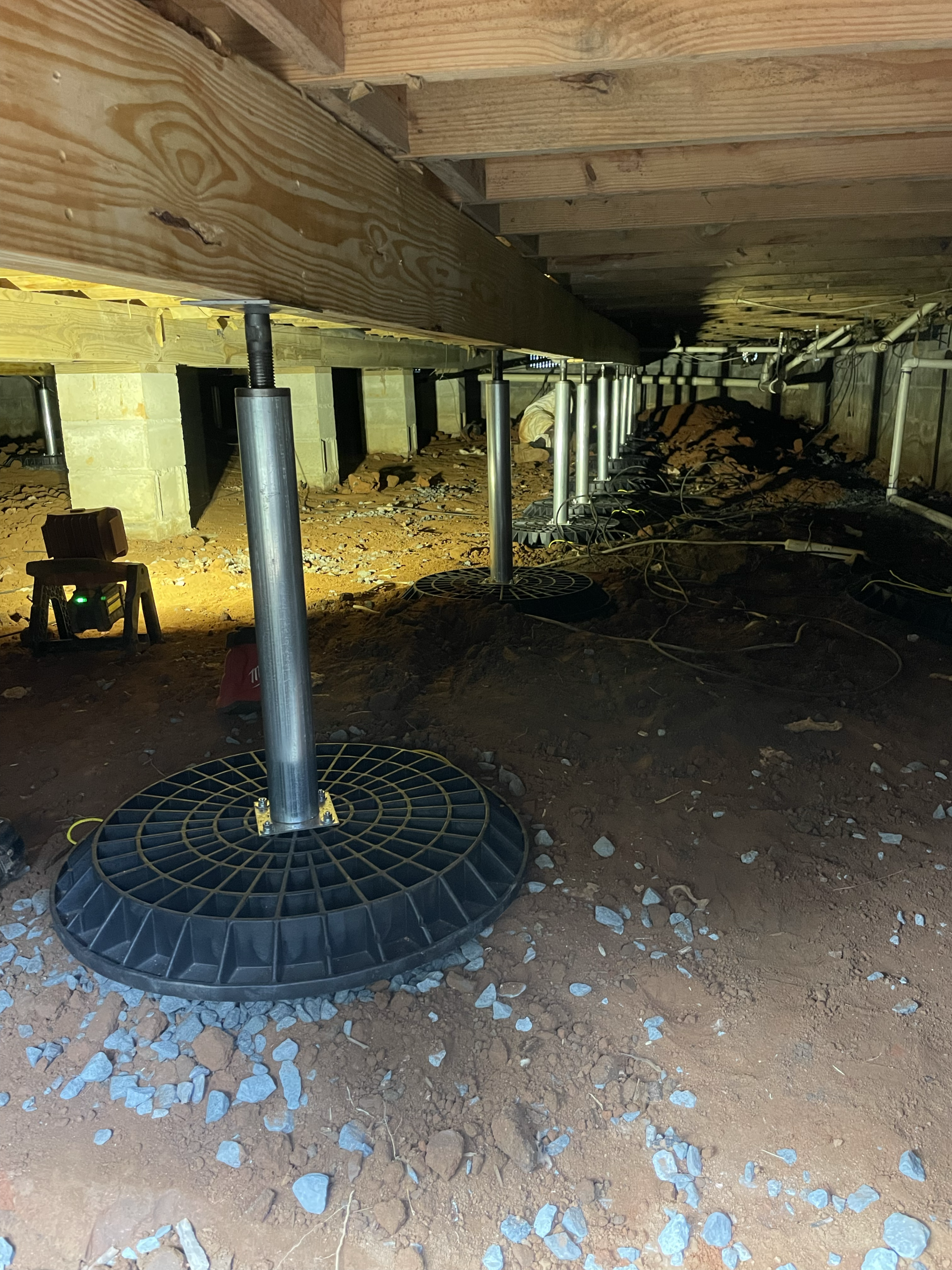
We use adjustable steel floor jacks/support posts rated for over 10,000 lbs, installed on a permanent composite footer base that sits on a gravel footing. This system is backed by an ICC rating, meaning it has been tested to meet load and building code requirements.

Why Homeowners Choose Structural Repair

Structural issues have a quiet way of stealing comfort. You adapt. You step around that spot. You stop trusting the floor the way you used to.

Repair changes that.

Benefits Homeowners Care most about

  • Floors feel solid again, less bounce, less movement, fewer surprises
  • Confidence that the home is supported the right way
  • Repairs that address the cause, not just the symptom
  • A clear plan and straightforward pricing before work begins
  • Stronger long-term support where it matters

If you want a simple next step, start with an inspection. We’ll tell you what’s happening and what it would take to fix it.

Our Framing Repair Process

Step 1 – Inspection & Identify

We inspect the crawlspace framing and identify which member is compromised and what load it carries.

Step 2 – Explain The Repair Plan

You get a clear explanation of what’s damaged, what needs repair vs replacement, and what results to expect.

Step 3 – Repair & Stabilize

We complete the framing repair safely and restore structural stability so the symptoms don’t continue.

Crawlspace Framing Repair FAQs

How do I know if I need joist repair or girder repair?2026-03-30T10:59:14-04:00

Joist issues are often more localized; girder/support issues typically affect wider areas. We confirm during our free inspection.

Do you replace termite-damaged framing?2026-03-30T10:58:41-04:00

Yes. If structural members are compromised, they can be repaired or replaced and stabilized appropriately.

Can framing be repaired without tearing up my floors?2026-03-30T10:57:52-04:00

Often, yes. Many repairs are performed from the crawlspace without removing finished flooring.

Do bouncy floors always mean rotted joists?2026-03-30T10:57:20-04:00

No. Bounce can come from damaged framing or from missing/insufficient support. An inspection confirms which one is driving the issue.

What is the difference between a rim joist and a band joist?2026-03-30T10:56:54-04:00

Most contractors use the terms interchangeably to describe the perimeter framing member at the edge of the floor system.
Areas We Serve

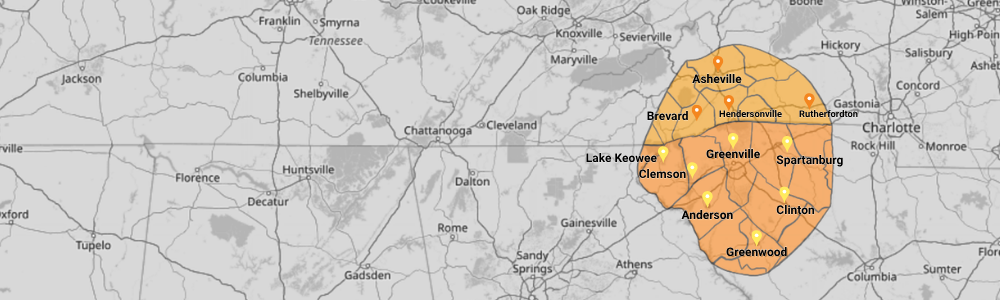
Our team provides foundation and structural repair services to a large area that covers part of Western North Carolina and Upstate South Carolina. The cities we service include, but are not limited to:

Greenville County — Greenville, Greer, Taylors, Travelers Rest, Mauldin, Simpsonville, Fountain Inn, Piedmont
Spartanburg County — Spartanburg, Boiling Springs, Duncan, Lyman, Inman
Anderson County — Anderson, Belton, Honea Path, Pendleton, Powdersville
Pickens County — Easley, Pickens, Liberty, Central, Clemson, Six Mile
Oconee County — Seneca, Walhalla, Westminster
Laurens County — Laurens, Clinton
Greenwood Area— Gaffney, Union, Greenwood, Cherokee

Buncombe County — Asheville, Arden, Fletcher, Candler, Black Mountain, Swannanoa, Weaverville
Henderson County — Hendersonville, Mills River, Flat Rock, Etowah
Transylvania County — Brevard, Pisgah Forest
Haywood County — Waynesville, Canton
Polk County — Tryon, Columbus, Saluda
Jackson/Macon (edge) — Sylva, Franklin

Areas We Serve

Our team provides foundation and structural repair services to a large area that covers part of Western North Carolina and Upstate South Carolina. The cities we service include, but are not limited to:

Greenville County — Greenville, Greer, Taylors, Travelers Rest, Mauldin, Simpsonville, Fountain Inn, Piedmont
Spartanburg County — Spartanburg, Boiling Springs, Duncan, Lyman, Inman
Anderson County — Anderson, Belton, Honea Path, Pendleton, Powdersville
Pickens County — Easley, Pickens, Liberty, Central, Clemson, Six Mile
Oconee County — Seneca, Walhalla, Westminster
Laurens County — Laurens, Clinton
Greenwood Area— Gaffney, Union, Greenwood, Cherokee

Buncombe County — Asheville, Arden, Fletcher, Candler, Black Mountain, Swannanoa, Weaverville
Henderson County — Hendersonville, Mills River, Flat Rock, Etowah
Transylvania County — Brevard, Pisgah Forest
Haywood County — Waynesville, Canton
Polk County — Tryon, Columbus, Saluda
Jackson/Macon (edge) — Sylva, Franklin

Go to Top