

We Can Help
There are many signs to look for when checking the health of your foundation. A foundation repair expert can determine any settling or shifting of your foundation and determine if foundation repair is necessary.
There are a variety of options available to strengthen and stabilize your home’s foundation while preventing future shifting. Our reliable foundation repair companies in the Carolinas provide you with confidence in knowing that your home is safe and secure.
Signs Your Foundation Needs Repairs
If you suspect that your foundation may need repairs, here are six of the most common signs to look for.
Benefits of a strong foundation
Without a strong foundation, everything above ground level is compromised. Protecting and stabilizing your foundation is one of the best investments you can make to protect your home and family.
Protect your property value
Foundation repairs can affect your home’s value. When buying a home with foundation issues, buyers often negotiate a reduced price, or the home will struggle to sell.
People will have more confidence buying a house with a sturdy foundation. This makes repairs in investment in the long run.
Maintaining Peace of mind
Every project is backed by trusted warranties and proven solutions, so you can feel confident your home is safe and secure.
We don’t cut corners. We use reliable products and expert crews that protect your investment. Every repair is designed to last, giving you lasting peace of mind.
Solutions for your Foundation Needs
Today’s engineering technology and innovative products provide several solutions to repair and support failing foundations. Each system is used for specific scenarios depending on the age, location, and structural materials used in your home.
Our helical pier system is engineered and made in America by a company called Grip Tite. This deep foundation support system is used in areas with weak or unstable soil.
The system consists of a steel shaft with helical-shaped plates, similar to a large screw, that are drilled into the ground beneath the foundation. The plates provide resistance and support to distribute the weight of the building and prevent settling. Helical piers can be used to support new construction projects or to lift and stabilize existing structures.
 This system can be installed quickly and adjusted in the future to provide precise support to the foundation.
If the stability of your basement wall is threatened by excessive pressure from outside soils, our force beam might be the best option.
This begins by installing W4-13 steel vertical I-beams against the foundation wall, inside your basement. They can have 1000 lbs. of active resistance by using a large spring mounted to the top of the I-beam.

This can be an effective solution for stabilizing and reinforcing foundation walls, preventing further damage, and ensuring the long-term stability of the foundation.
Dead man anchors use steel rods driven through the foundation and into the surrounding soil. Those anchors are attached to steel plates buried outside and anchors to support the foundation walls.
This may include limited disruption to landscaping and the yard, and there is less intrusion on the interior of the home.

Dead man anchors offer the option of straightening the wall back to or close to its original position. This requires a full excavation of the exterior of the wall.
A Carbon Fiber Wall Support System from Structural Reinforcement Solutions is designed to reinforce and stabilize foundation walls that are showing signs of damage or weakness.

The carbon fiber wall straps are applied to the interior surface of the foundation wall using a high-strength epoxy adhesive. The straps are lightweight, yet incredibly strong, and can provide structural reinforcement to the foundation wall.
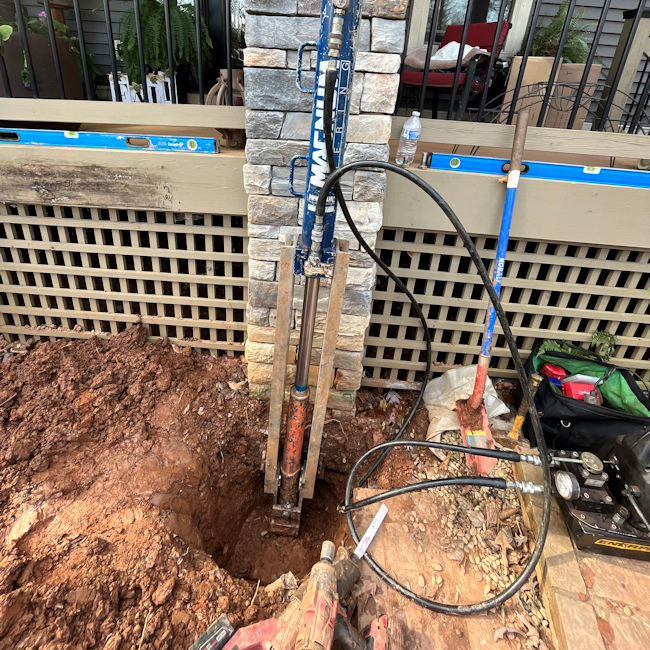
A push pier is a deep foundation support product similar to a helical pile. They work by using a hydraulic jack to drive steel piles into the ground until the structure starts to rise.
the Foundation Experts
Foundation repair services are crucial for maintaining the structural integrity and safety of homes. The region’s soil composition, climate, and other environmental factors can contribute to foundation issues, such as settling, cracking, and bowing.
A reliable foundation repair company can help address these issues, prevent further damage, and restore the structural integrity of the building.
Delaying foundation repairs can lead to more extensive and costly damage, and even jeopardize the safety of the occupants of the property. If you’re concerned about the safety or longevity of your foundation, give us a call today.
Foundation Repair FAQ’s
Concrete leveling is a process that lifts sunken slabs by filling voids beneath the concrete. With polyjacking, we inject high-density polyurethane foam that expands to fill empty spaces and lift the slab toward level.
A structural expert should be contacted any time you notice cracks growing, uneven floors developing, moisture accumulating, or abnormal movement within the home. Early evaluation prevents secondary damage, provides repair options before issues worsen, and helps avoid higher future repair costs.
Almost all foundation and crawlspace repairs take place beneath the home or along the exterior perimeter, meaning homeowners can safely remain in the house during the project. While the process may be loud or disruptive at times, the living areas of the home are typically unaffected and no relocation is required.
Buying a home with foundation issues isn’t necessarily a deal-breaker, as most structural problems can be repaired. However, you should only proceed if there is a clear assessment from a qualified structural expert and a written repair plan detailing the scope and cost. This allows you to negotiate the sale price or require repairs before closing.
Foundation problems rarely stabilize on their own. Soil pressure, moisture cycles, erosion, and structural loads continue to influence the foundation, causing cracks to widen, floors to become more uneven, and walls to shift further out of alignment. Without correction, both repair costs and structural risks increase over time.
While nearly every home experiences small amounts of foundation settlement over time, noticeable shifting, cracking, or unevenness is not considered normal and often signals foundation distress. Soil movement, water intrusion, and structural loads can cause settling that must be corrected before secondary damage (like sagging floors or structural separation) develops.
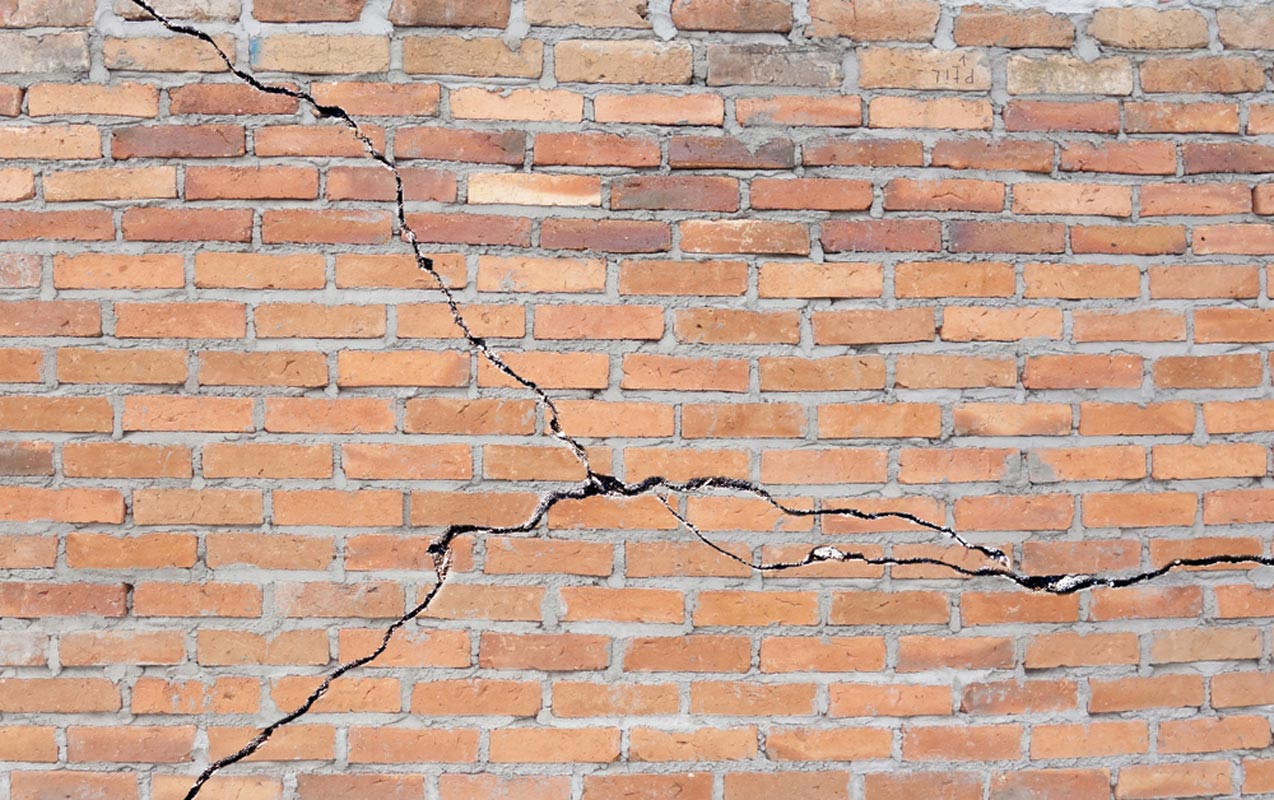
Vertical cracks are commonly caused by normal curing or drying shrinkage and are usually less alarming. Stair-step cracks or diagonal cracks are more concerning because they typically indicate settlement. Horizontal cracks are the most serious, particularly in below-grade walls, because they signal inward pressure from soil or water and often accompany bowing or bulging foundation walls.
Foundation problems typically arise from unstable or expansive soils, inadequate or undersized footers, changes in soil moisture, or prolonged pressure against foundation walls. Poor drainage, clogged gutters, and grading that directs water toward the home can accelerate soil movement. Over time, this movement results in settling, cracking, bowing walls, and structural instability.
The primary cause of foundation damage in Greenville is the region’s expansive red clay soil, which swells during wet seasons and shrinks during dry periods. This constant soil movement places stress on foundations. Additional factors include heavy rainfall, poor grading, and aging homes with inadequate drainage. These environmental conditions make settlement and cracks especially common throughout the Upstate.
Sagging or bouncy floors are commonly caused by deteriorated floor joists, weakened girders, undersized supports, excessive spans, or moisture-related wood rot in the crawlspace. In humid regions like the Carolinas, open crawlspaces allow moisture to accumulate, leading to rot, mold, termite activity, and compromised structural framing. These issues worsen as moisture persists, making early inspection important.
Hairline vertical cracks are often cosmetic, but larger cracks require attention—especially horizontal cracks, stair-step cracks, or vertical cracks wider than 1/4”. Horizontal cracks often indicate inward wall pressure or bowing, while stair-step cracks suggest settlement beneath brick veneer. Cracks accompanied by moisture intrusion or worsening over time should always be inspected by a foundation expert.
In Upstate SC and Western NC, foundation settlement is most commonly caused by expansive red clay soils that swell when wet and shrink when dry. Additional contributors include poor exterior drainage, heavy rainfall, soil erosion, low or inadequate footings, and construction on poorly compacted or backfilled soil. These conditions allow the soil to shift, causing the foundation to move or sink over time.
Common signs of foundation problems include stair-step cracking in brick, wide or horizontal cracks in foundation walls, uneven or sloping floors, sticking doors or windows, separation of trim or cabinets, and gaps developing around windows or wall joints. These issues typically indicate soil movement or structural settlement and often worsen over time if not addressed.
Most foundation repairs are considered permanent solutions. Many systems allow for adjustments, tightening, and increased security in the future if necessary.
A professionally installed and properly maintained home foundation should last for 150 years or more.
Yes. If your foundation fails, it can reduce your home’s value significantly or deem the property unsafe to live in.